


History of the Beowulf Manuscript
Known as Cotton Vitellius Axv, the codex containing the only extant copy of the Anglo-Saxon epic poem, Beowulf, has an intriguing history and legend of its own.
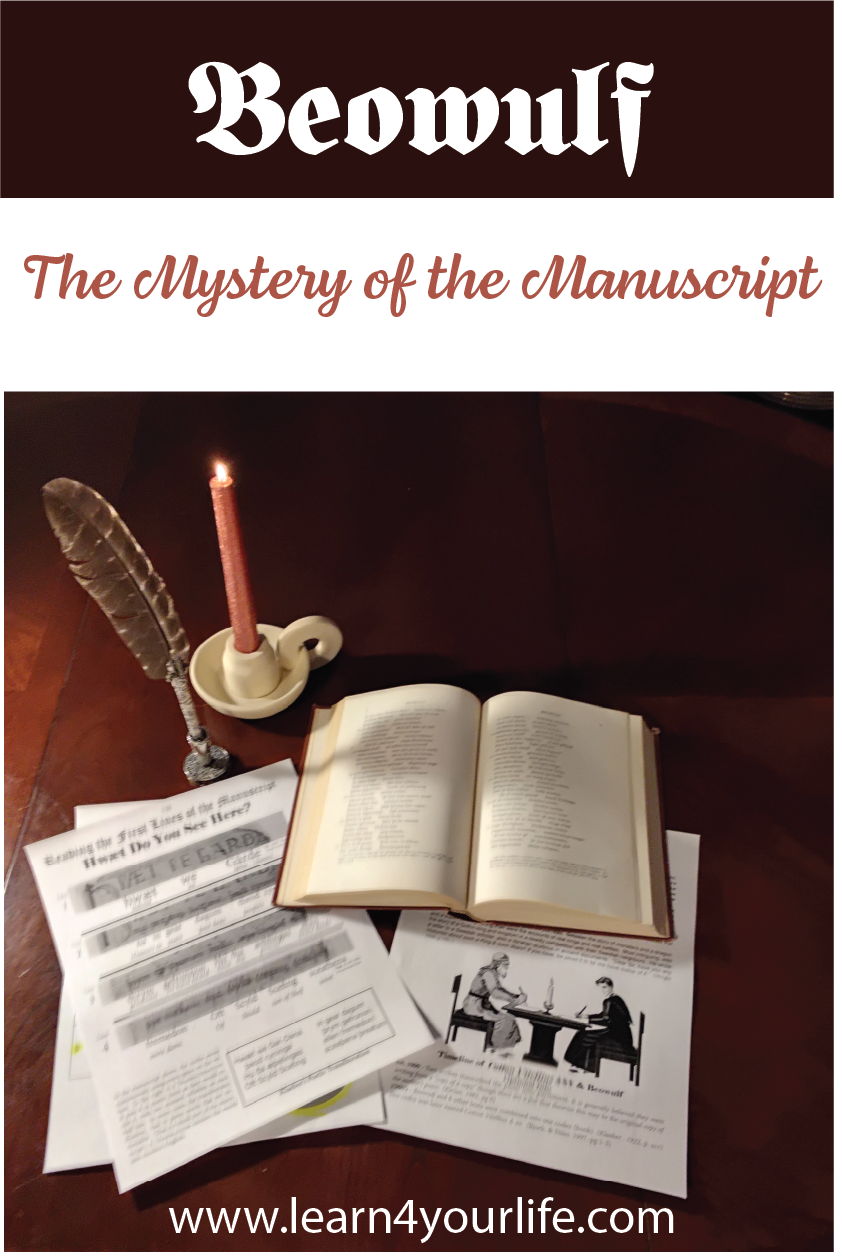
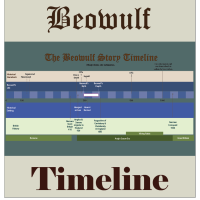
Timeline and Facts about the Beowulf Manuscript.
While the legend of Beowulf belongs to fantasy and folklore, the story of the manuscript that bears his name belongs to history.
The story of the story is among the most fascinating in literary history, an intrigue that is hard to pass on to high school students struggling with Anglo-Saxon vocabulary and ancient story-telling techniques.
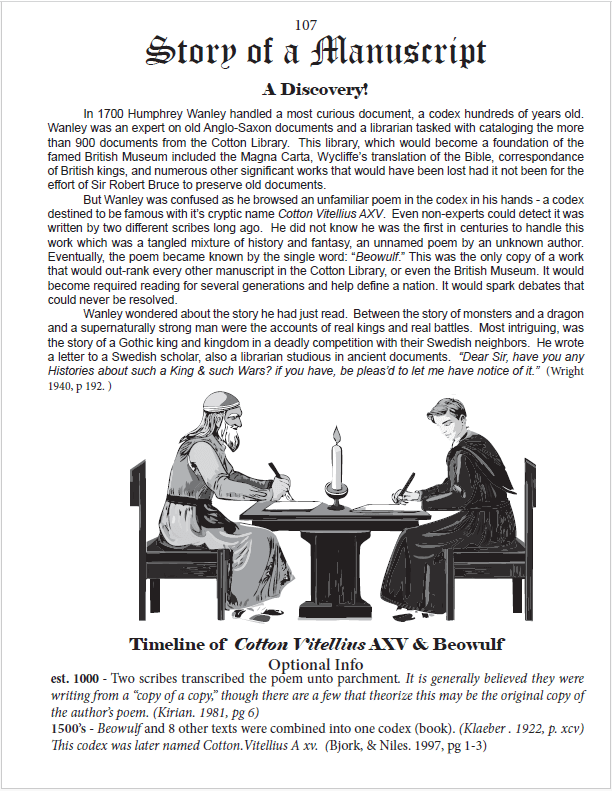
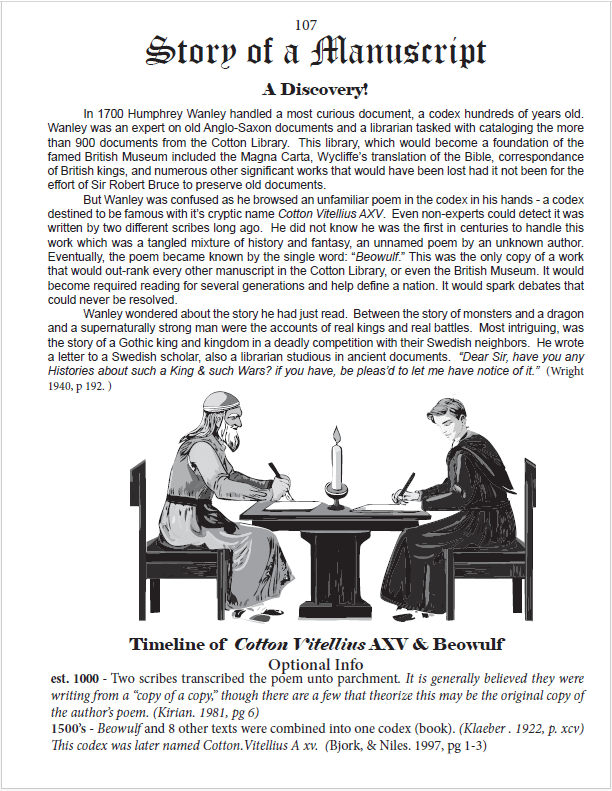
Facing the Dragon: Beowulf Unit Study introduces us to the person who first brought the tale to light:
In 1700 Humphrey Wanley handled a most curious document, a codex hundreds of years old. Wanley was an expert on old Anglo-Saxon documents and a librarian tasked with cataloging the more than 900 documents from the Cotton Library. This library, which would become a foundation of the famed British Museum included the Magna Carta, Wycliffe’s translation of the Bible, correspondance of British kings, and numerous other significant works that would have been lost had it not been for the effort of Sir Robert Bruce to preserve old documents.
But Wanley was confused as he browsed an unfamiliar poem in the codex in his hands - a codex destined to be famous with it’s cryptic name "Cotton Vitellius AXV." Even non-experts could detect it was written by two different scribes long ago. He did not know he was the first in centuries to handle this work which was a tangled mixture of history and fantasy, an unnamed poem by an unknown author. Eventually, the poem became known by the single word: “Beowulf.” This was the only copy of a work that would out-rank every other manuscript in the Cotton Library, or even the British Museum. It would become required reading for several generations and help define a nation. It would spark debates that could never be resolved.
Here, then, is the account of how this bewitching account came into our hands.
Timeline of the Beowulf Manuscript
(References are at the bottom of this page)- 1000 A.D. estimate - Two scribes transcribed the poem unto vellum. It is generally believed they were writing from a “copy of a copy,” though there are a few that theorize this may be the original copy of the author’s poem.1
- 1500’s - Beowulf and 8 other texts were combined into one codex (a Medieval book bound by scribes).2 (This same codex was later named Cotton Vitellius A xv.)3
- 1563 - “Laurence Nouell” and “1563” were written on top of the first folio of the codex. Lawrence Nowell (lived approximately 1530-1576) was a dean at Lichfield and believed to have been involved in the preservation of the manuscript.4 (Writing the date was often done when a manuscript was obtained by a librarian.)5
- Between 1588 - 1631 Sir Robert Cotton (lived 1571 - 1631) collected 958 old manuscripts after Henry VIII’s “Dissolution of the Monasteries.”6 Cotton was part of The Elizabethan Society of Antiquaries, preserving old documents. 7
- 1631 - Robert Cotton died after King Charles I sealed his library. A pamphlet critical of the monarch had been found to be in the Cotton library.8
- 1696 - Thomas Smith cataloged the collection in Catalogus Librorum Manuscriptorum Bibliothecae Cottonianae.9 Beowulf was not included in this catalog.10
- 1698 - A librarian, Humphrey Wanley, unsuccessfully tried to get Oxford University to buy the Cotton Library. (If they would have, it would not have been burned.)11
- 1700 - Cotton collection was sold and transferred to Ashburnham House. 12 (Yikes! Bad name!)
- 1700 - Beowulf is finally read! The librarian Wanley then wrote to a Swedish scholar after reading the Beowulf manuscript. “Dear Sir, have you any Histories about such a King & such Wars? if you have, be pleas’d to let me have notice of it.” 13
- Oct 23, 1731 - Fire! One hundred fourteen of the 958 Cotton manuscripts were destroyed and 98 were damaged (including Beowulf.)14 Beowulf survived because it was thrown out the window but many parts are now unreadable.15
- 1753 - The Cotton Library was transferred to the British Museum.16
- 1786/7 - Thorkelin made his own handwritten transcripts. Part of the original manuscript has since crumbled which left only Thorkelin’s transcript for several lines. Many question Thorkelin’s accuracy because of errors in the Thorkelin account on parts of the manuscript that are legible. 17
- 1815 - Grundtvig discovers King Hygelac in the poem is the same as Chlochilaichus in history.18
- 1837 - 1845 - Gough and Madden conserved Beowulf and the rest of the Cotton Library by placing the original vellum in paper frames.19 Per Kirian, these frames are preserving the pages well though there are places they cover the original words.20
- 1882 - New binding of the codex was done. 21
- 1882 - Zupita publishes pictures of the Beowulf folios (pages) with Old English transliteration based on Thorkelin’s work.22 This allowed the public to view the original folios.
- 2015 - Electronic Beowulf published online - Kirian published an electronic version of the original folios. Anyone now can see the original manuscript folios and enlarge them 300%.23
How Cotton Vitellius Axv Got Its Name
The codex that contained the Beowulf manuscript also contained eight other Medieval texts. But how did it come to be known by the name "Cotton Vitellius Axv?"
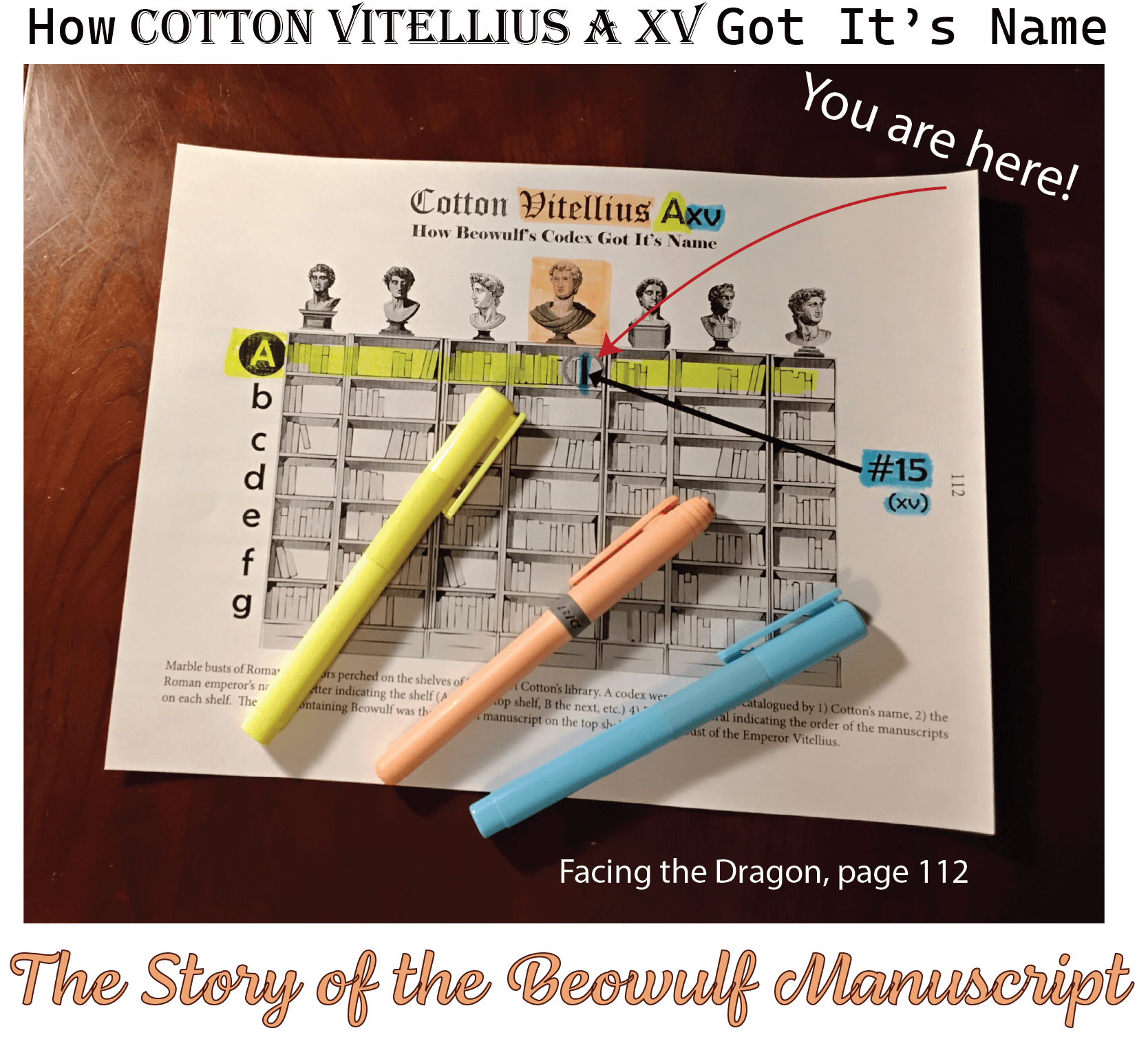
1. Cotton
Sir Robert Cotton collected almost one thousand Medieval documents. (See timeline above.) He lived from 1751 to 1631.2. Vitellius
The library had busts of different Roman Emperors. The codex containing Beowulf was under the statue of Vitellius, who reigned for eight months in 69 A.D.3. Letter "A"
Documents on all top shelves were designated with the letter "A." Next shelf down would be "B", then "C", etc.4. Roman Numeral XV
XV designates "15" using Roman Numerals. The Beowulf Codex was, therefore, the fifteenth document on the top shelf, beneath the bust of Vitellius, in the library of Sir Cotton.Aren't you glad your local library doesn't use that system?
The Unit Study and the Manuscript
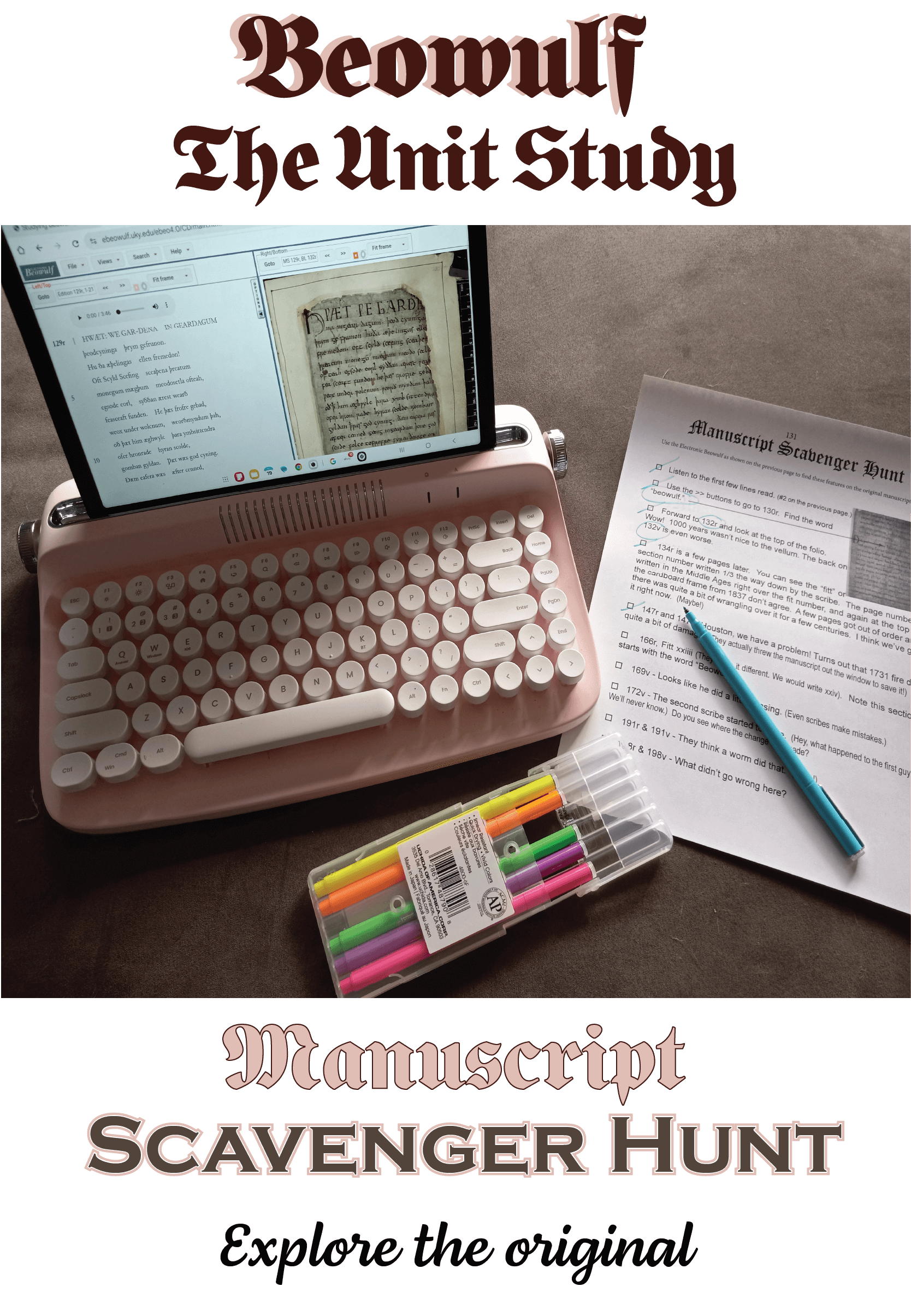
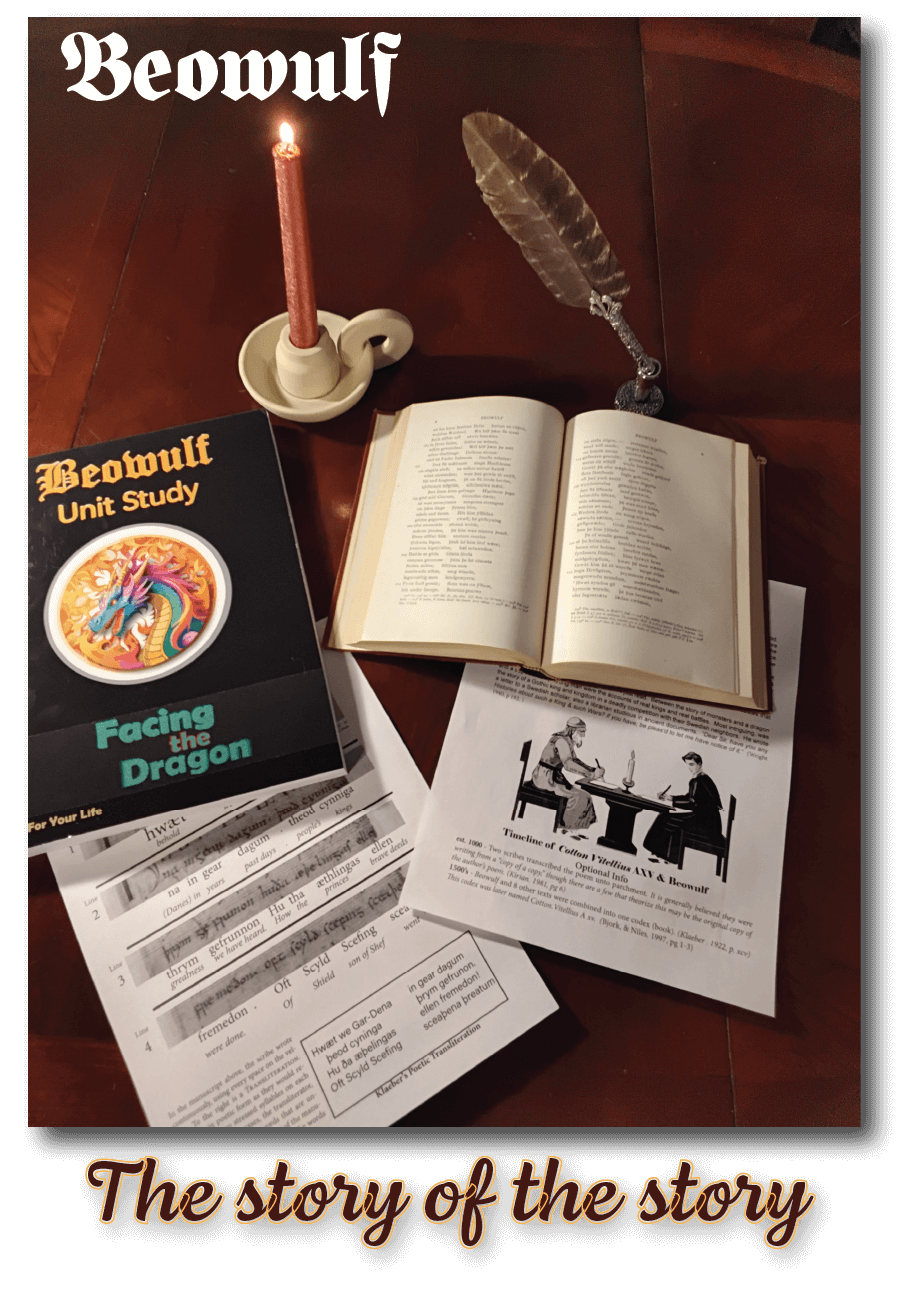
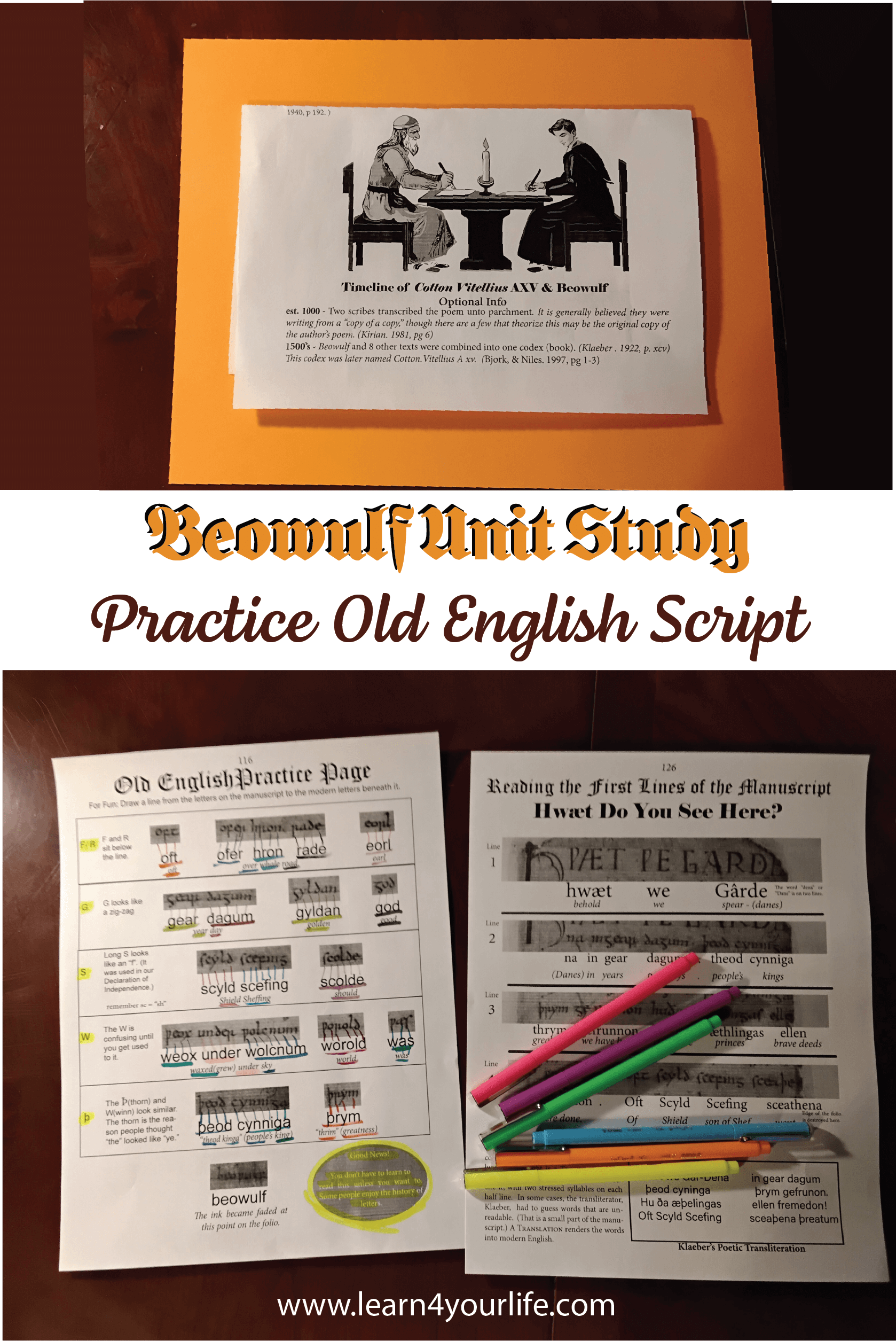
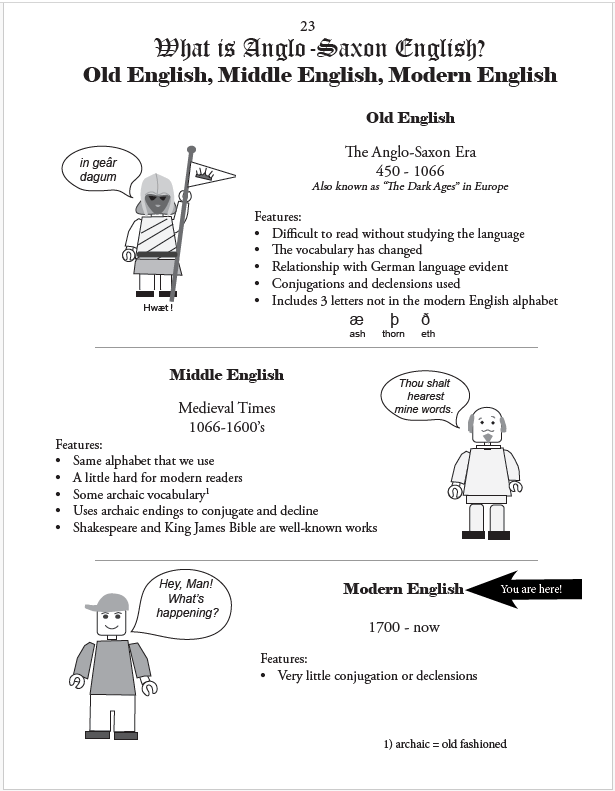
In addition to the action plot and narrative, readers also delve into competing theories of the story's origination, mysteries surrounding the sole surviving manuscript, and fun with Anglo Saxon (including three forgotten letters.)
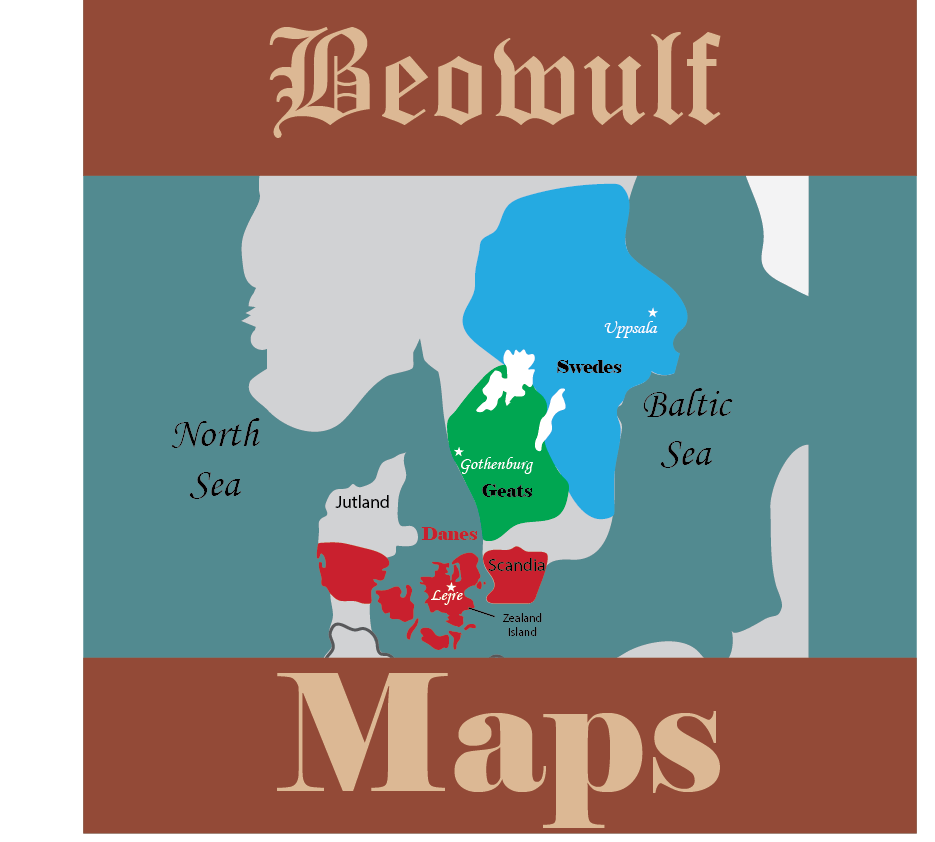
Maps, info-graphics, and background history provide multiple options for hands-on learning and group and solo projects.
References
1) Kiernan, Kevin. 1981. Beowulf and the Beowulf Manuscript. University of Michigan Press. pg 62) Klaeber, Frederick. 1922. Beowulf and the Fight at Finnsburg. DC Heath and Company. Third Edition, 1940 page xcv.
3) Bjork, Robert and Niles, John, editors.1997. A Beowulf Handbook. University of Nebraska Press. pg 1-3)
4) Klaeber. 1922. page xcvi
5) Wright, C.E. 1960. “Humfrey Wanley: Saxonist and Library Keeper. Proceedings of the British Academy. p 118.
6) Hall, John R Clark. 1901. Beowulf and the Finnsburg Fragment: A Translation Into Modern Prose. Swan Sonnenschein and Company, London.
7) Wright, C.E. 1958. “The Elizabethan Society of Antiquaries and the Formation of the Cottonian Library.” Chapter Nine in: The English Library before 1700, editors Wormald and Wright: Athlone Press, pp. 176-212.
8) Ibid, pg 207.)
9) Norman, Jeremy. “Sir Robert Bruce Cotton Collects One of the Most Important Libraries Ever Assembled by an Englishman.” (Internet article) HistoryofInformation.com: https://www.historyofinformation.com/detail.php?entryid=1800. Accessed 12/21/2024
10) Wright, C. 1958
11) Ibid.
12) Hall. 1901, pg )
13) Wright, Ruth C. 1940. “Letters from Humfrey Wanley to Erick Benzelius and Peter the Great’s Librarian,” Durham University Journal, Vol 32, No 3, pp 192.
14) Norman, 2024.
15) Hall. 1901, pg x
16) Ibid. pg x
17) Ibid. pg x
18) Bjork, & Niles. 1997, pg 196.
19) Norman, J. 2024.
20) Kirian. 1981, pg 326.
21) Hall. 1901, pg x
22) Zupitza, Julius. 1882. Beowulf: Autotypes of the Unique Cotton Ms. Vitellius A XV in the British Museum. Published for the Early English Text Society, By N. Trubner & Co. London.
23) https://ebeowulf.uky.edu/ebeo4.0/CD/main.html
Get the Beowulf Unit Study
Unlock the action plot, history, and debates of the ancient tale.
Available in Paperback OR Printable Download
253 pages
(Includes Student Pages, Teacher Key, References, Maps, Charts and More!)
Print It Now


$5.99 Your link to print will last for five days.
Ready-in-a-minute lesson plans can be used with any translation.
Easy-to-read summary for each section.
Softcover Edition - Mailed to You
The same pages are in the softcover book and the printable file. Keep your papers bound together and use this book for years to come. It will be your go-to-guide for all things Beowulf!
17.95 Soft Cover Manual
Mailed to You
Beowulf Pages
Check here for all things Beowulf.




Ready To Use Resources



About Our Site
Hands-On Learning