


Beowulf Timelines
Timelines of Beowulf's life, estimated dates of historical events in the epic poem that bears his name, and the discovery of the manuscript that made him famous
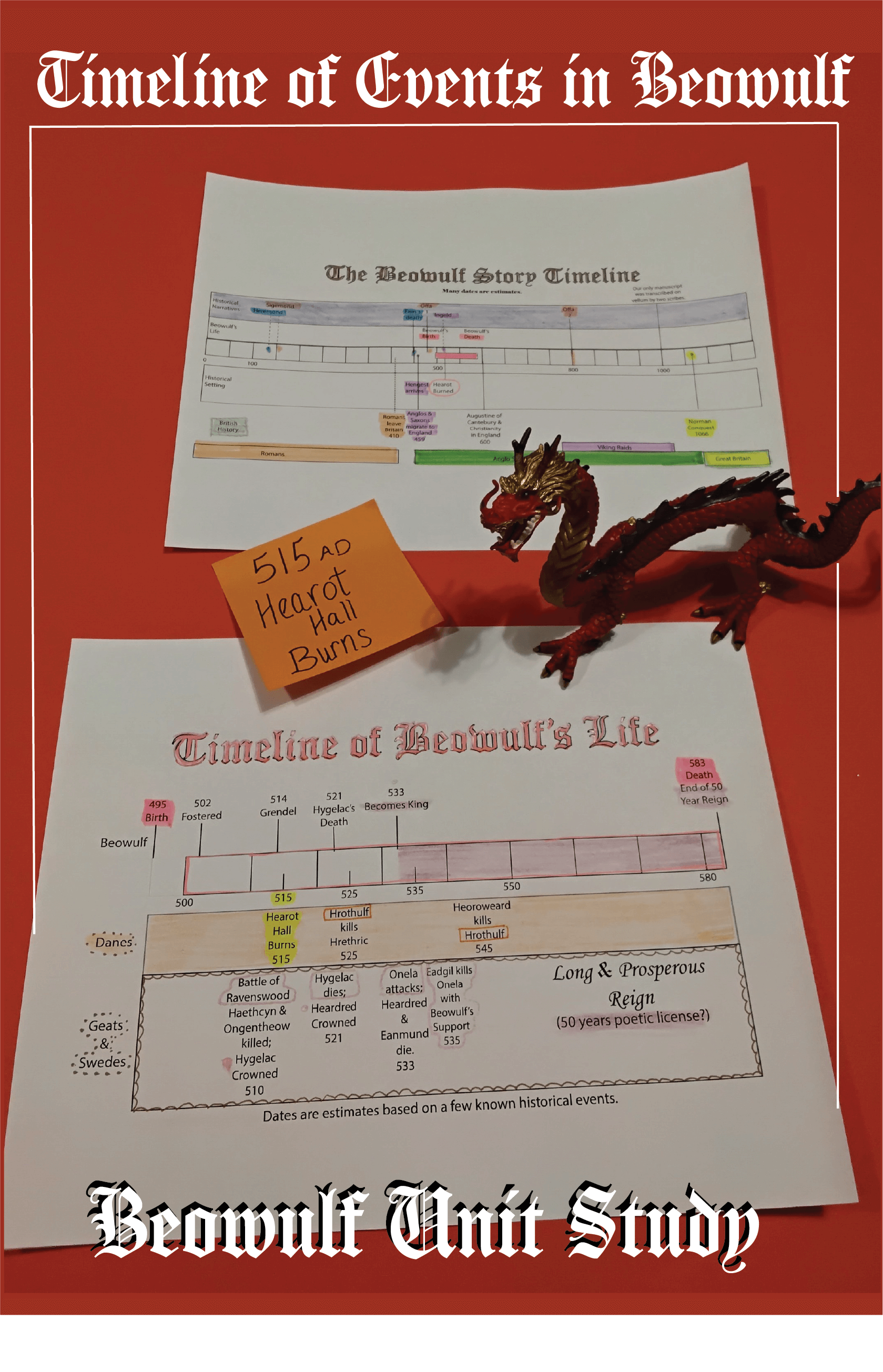
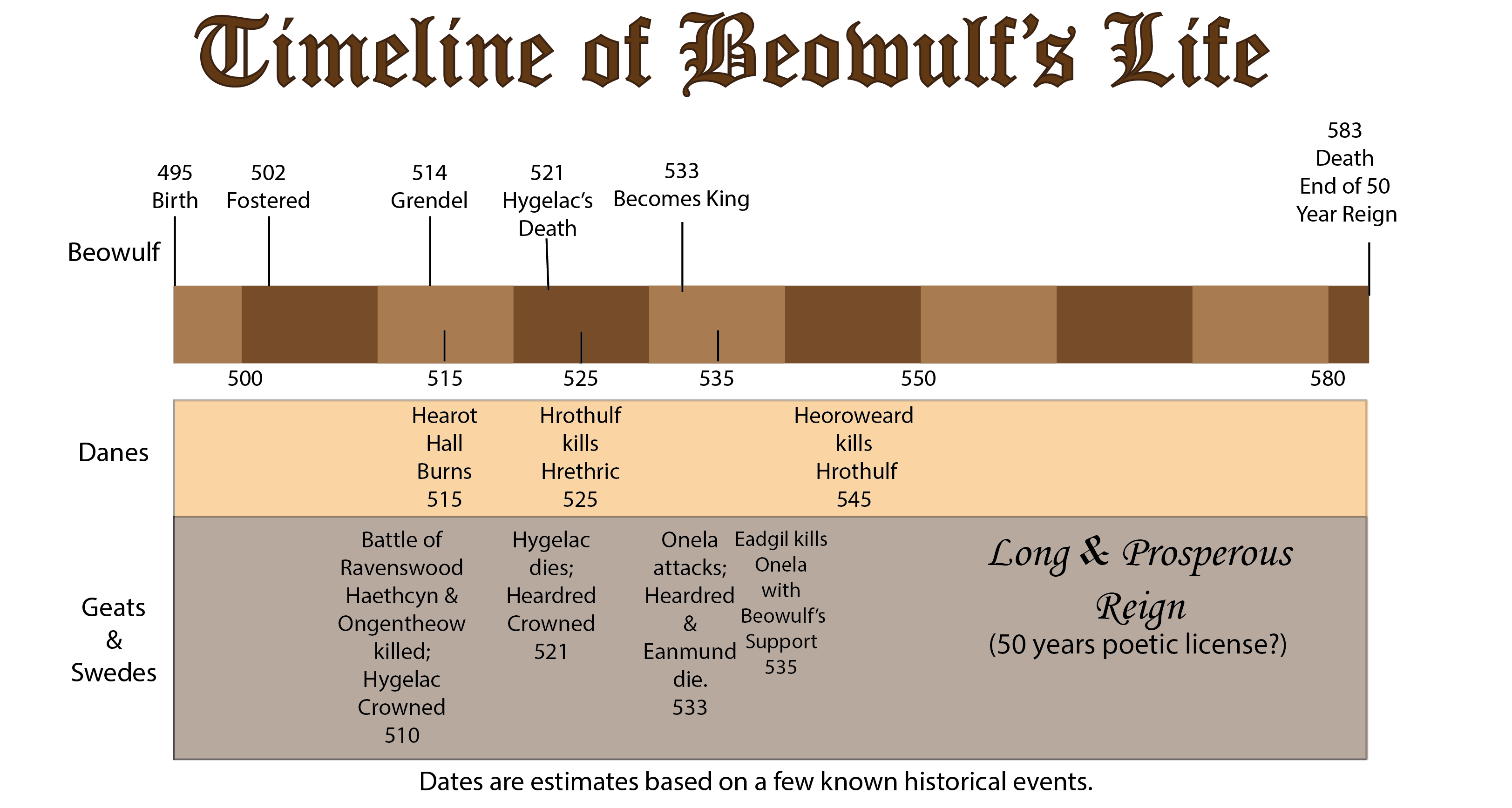
Timeline of Beowulf's Life
However, just because Beowulf, as we know him in legend, is a fictitious character, it does not mean that there is no possibility his character might have been based on a real person. However, we are left in the dark who that person might be and when he lived.
Here, we are estimating the major events in the life of Beowulf as told in the epic Anglo-Saxon poem named for him. The dates below are based on one major event: the burning of Heorot Hall.
Using JR Tolkien's estimates (he being the most famous of all the Beowulfian scholars) as well as the 515 A.D. dating for the burning of Hearot Hall, we can give the following approximations on the life of the legendary Beowulf:
- 495 A.D. - Birth
- 502 - Fostered by his maternal grandfather
- 510 - Battle of Ravenswood, Coronation of King Hygelac (Beowulf's uncle)
- 514 - Fight with Grendel and his mother
- 515 - Burning of Hearot Hall of the Danes
- 521 - Death of King Hygelac and Coronation of Heardred (Beowulf's cousin)
- 533 - Death of Heardred, Coronation of Beowulf
- 583 - Dragon Duel and Death of Beowulf
The other events in the tale may be harder to follow but have greater significance. Indeed most are historical or at least based on history. But due to the back-and-forth manner in which the narrative unfolds, and the fact that such historic events have been dropped from grade-school history books, these parts of the story are often overlooked.
Timeline of Historic Events in the Beowulf Epic Poem
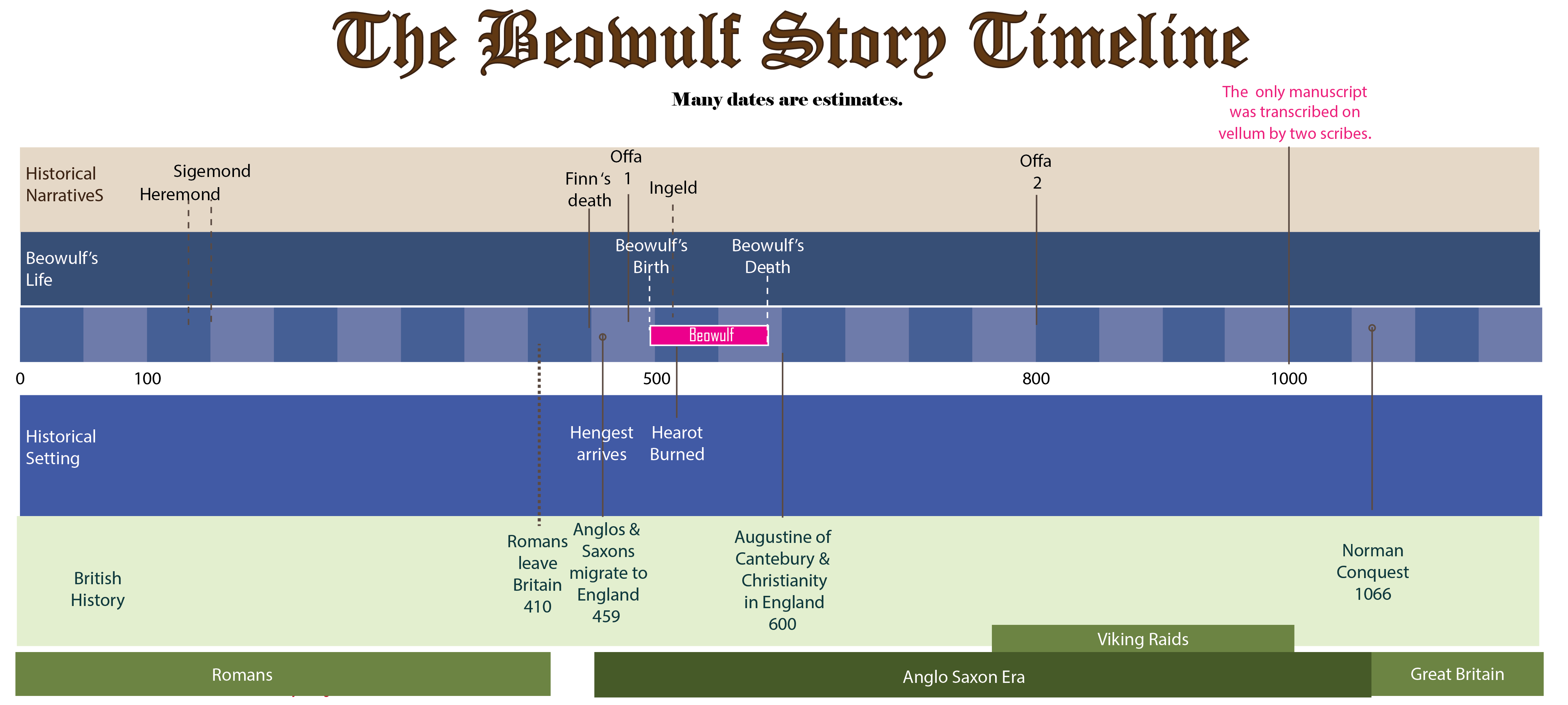
What we do know, however, is that the unknown author of the famous Beowulf poem used other sources in the creation of this narrative. For this timeline, we accept all events as historical (though a bit of skeptism is indeed warranted.)
Moreover, a few events that are not specifically listed in the poem, but impact it's overall history, are included in the timeline below with an asterisk.
Historical Events in Beowulf Timeline
Dates are Estimates
- 125 A.D. - Heremond - Legendary Danish King, deposed
- 160 - Sigemond - Heroic dragon slayer, family murder
- 410 - Roman withdrawal from British Isles (arrived in 43 A.D.)*
- 448 - Death of Finn in battle between Frisians, Danes, Jutes
- 449 - Hengst migrates to British Isles, founder of Kent (now part of England)
- 459 - Large scale migration of Anglos, Saxons, and a few other Germanic tribes to Britain*
- 459 to 1066 Anglo Saxon Era of the British Isles
- 475 - Offa I, Prince of Angln on Jute Peninsula (modern Denmark)
- 495 - Birth of Beowulf (estimate based on 515)
- 510 to 535 - Battles between Geats and Swedes (see timeline above of Beowulf's life); Starts with Ravenswood
- 514 - Beowulf kills Grendel
- 514 - Ingeld of the Heathobards marries Danish Princess Freawaru
- 515 - Hearot Hall of the Danes is Burnt
- 525 - Hrothulf, grandson of Helfdene, kills Hrethric son of Hrothgar, his cousin
- 545 - Hrothulf is killed by Heoroweard, his cousin*
- 583 - Death of Beowulf
- 600 - Christianity brought to British Isles by Augustine of Cantebury*
- 757 - Offa II becomes king of Mercia* (now part of England)
- 793 to 1066 Era of Viking Raids*
- 1066 - Norman Conquest of England from France, end of Anglo-Saxon era, beginning of United Kingdom*
When was Beowulf Written?
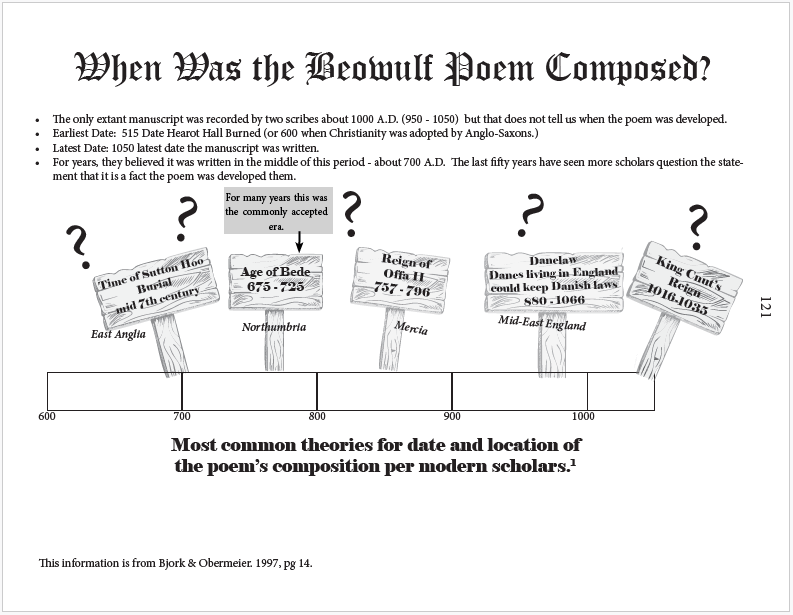
- When the story was written
- The history of the manuscript (and how the story came to us.)
Firsts, we can't tell for certain, because the first known manuscript was penned about 1000 A.D. Though not universally accepted by all scholars, it is widely assumed that this manuscript was copied and recopied from previous manuscripts.
That leads us to the question of when the first version of this story was written. Answer: No one knows for sure; but there are good theories. (See picture above.)
However, and here's the real kicker, even if we could tell exactly when this story was first written, it does not tell us when it was first told.
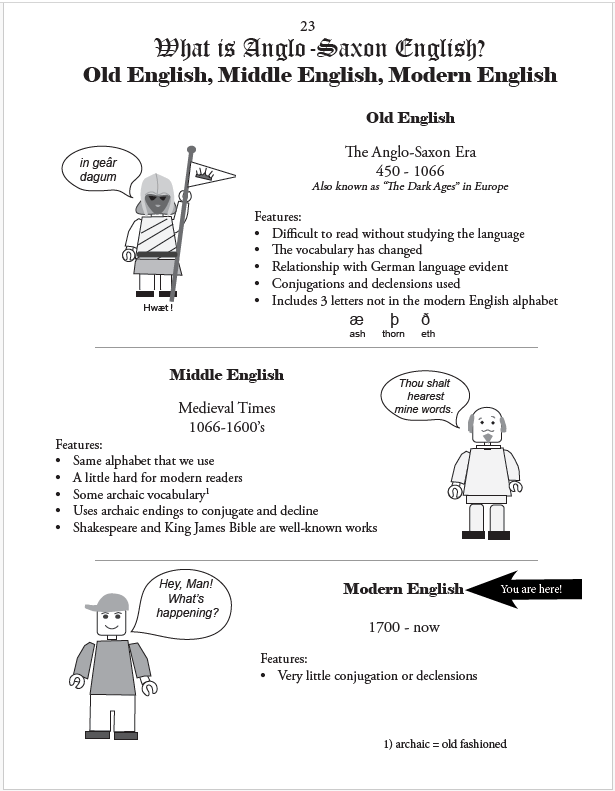
In the unit study, students dig into different theories and speculations. For instance, there are tales of another character similar to Beowulf readers can investigate.
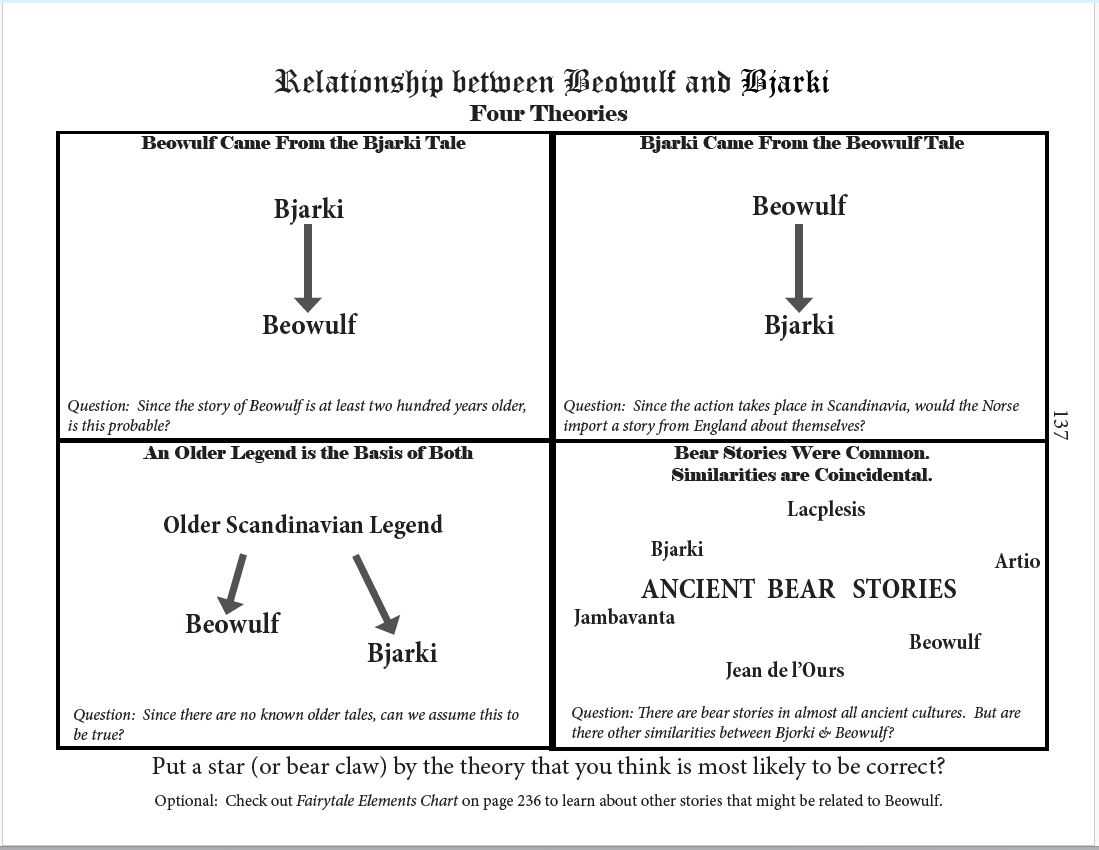
- The only known written copy of Beowulf is one thousand years old.
- The first (unknown) written copy has been theorized to be written between 600 A.D. to 1000 A.D.
- The oral story from which Beowulf may have originated is virtually impossible to determine, though fun to theorize.
Timeline of the Beowulf Manuscript
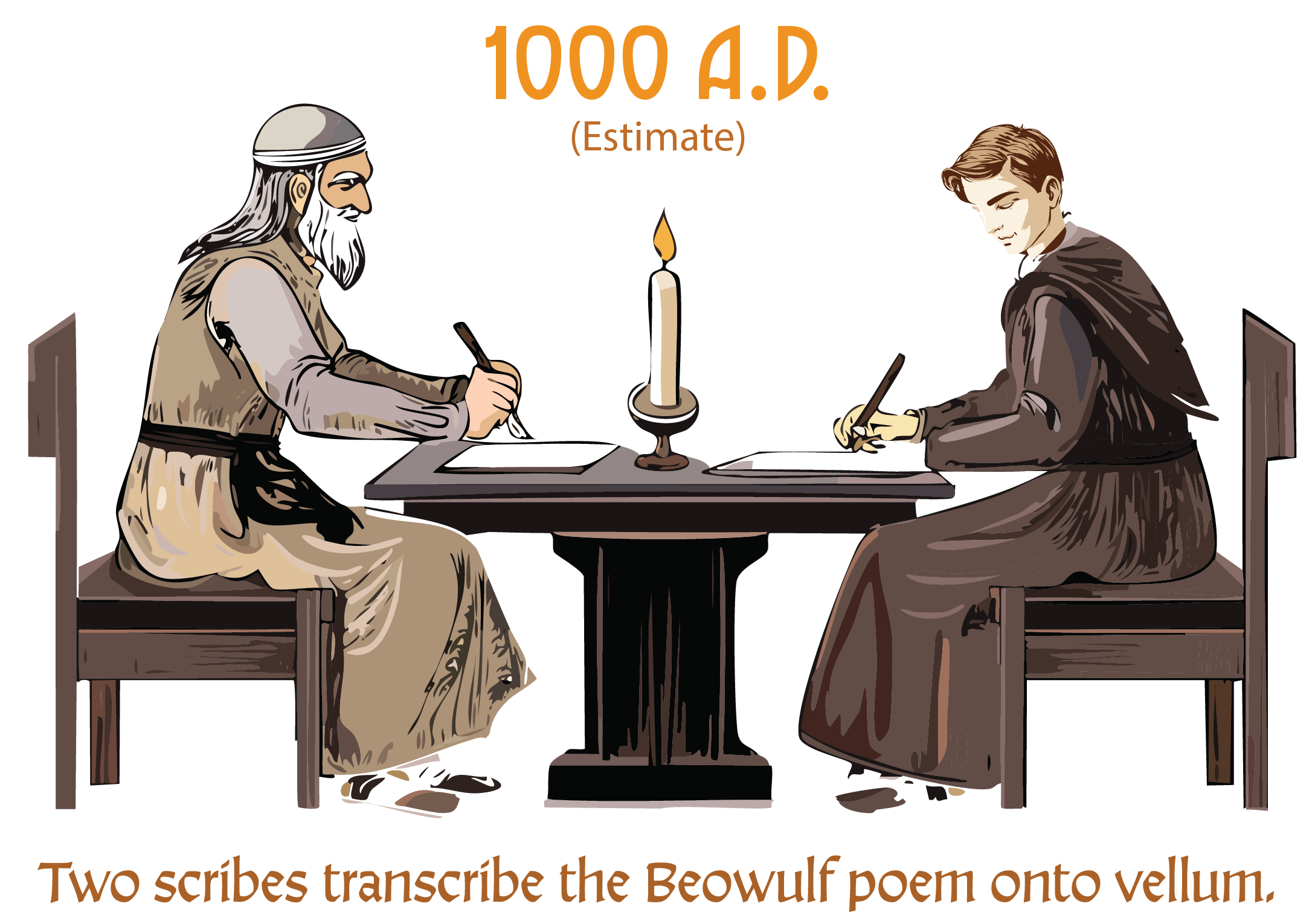
- est. 1000 A.D. - Two different scribes transcribed the poem onto parchment
- est. 1500 - The Beowulf poem and 8 other texts were combined into one codex (Medieval book)
- est. 1600 (before 1631) Sir Robert Cotton adds the codex to his library of old documents. When his collection is later cataloged, the codex is named: "Cotton Vitellius AXV." (see other page linked above)
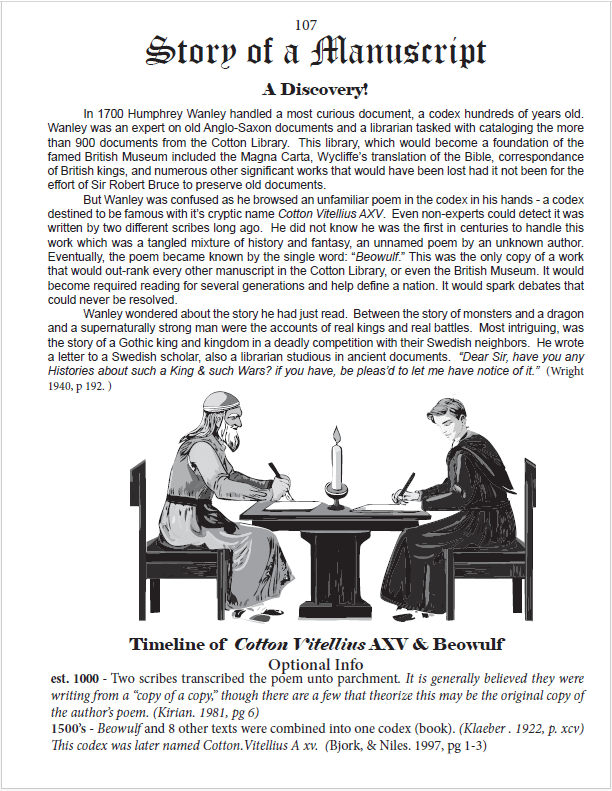
- 1700 - Humphrey Wanley, a librarian and expert on Anglo-Saxon manuscripts, reads the Beowulf poem. (Perhaps for the first time in 700 years!) He is intrigued.
- Oct 23, 1731 - Fire destroyed many documents in the collection. Cotton Vitellius AXV is thrown out the window. The Beowulf poem is damaged.
- 1753 - Transferred to the British Museum - where it remains to this day.
Get the Beowulf Unit Study
Unlock the action plot, history, and debates of the ancient tale.
Available in Paperback OR Printable Download
253 pages
(Includes Student Pages, Teacher Key, References, Maps, Charts and More!)
Print It Now


$5.99 Your link to print will last for five days.
Ready-in-a-minute lesson plans can be used with any translation.
Easy-to-read summary for each section.
Softcover Edition - Mailed to You
The same pages are in the softcover book and the printable file. Keep your papers bound together and use this book for years to come. It will be your go-to-guide for all things Beowulf!
17.95 Soft Cover Manual
Mailed to You
Beowulf Pages
Check here for all things Beowulf.
Facing the Dragon

Middle & High School
Lesson Plans
Content by Section
Maps
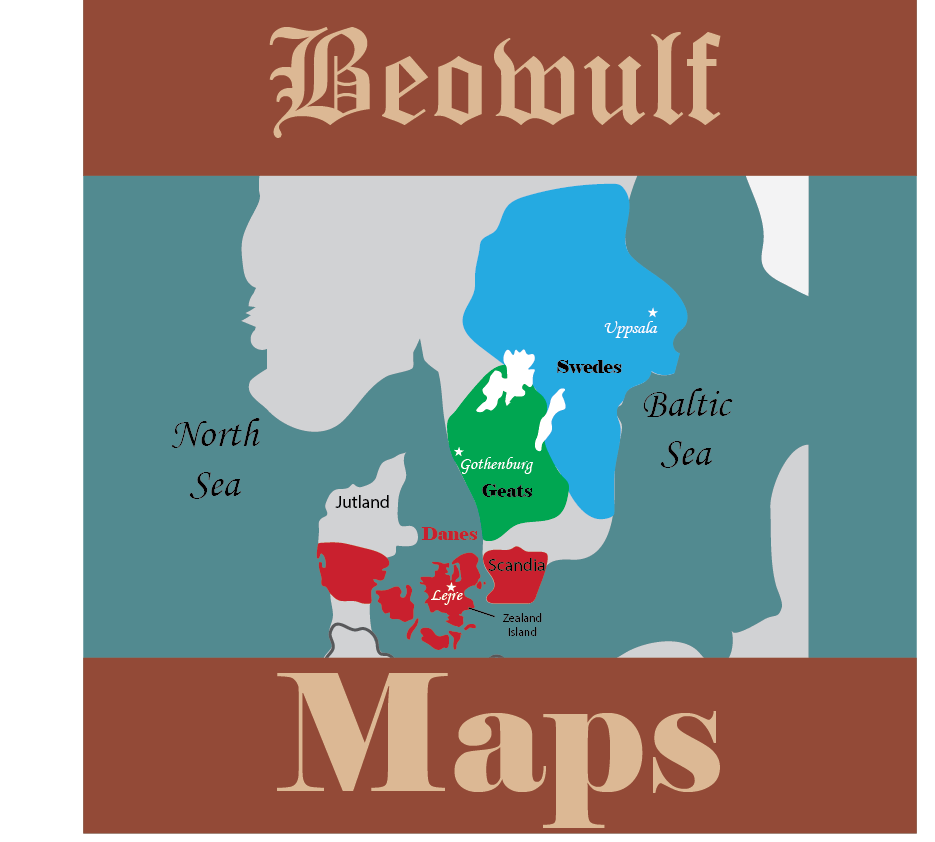
The Land of Beowulf
Themes
Theme/Motifs/Purpose
The Finn Tragedy
Finn, Hildeburg, Hengst
Mirrored Reflection
Mise en Abyme
Modern Summary
Section by Section
Beowulf's Monsters

What is their role?
Why Read It?
4 Benefits of Beowulf
7 Challenges
The Gulf Between Us
Best Quotes

From & About the Poem
Basic Info
Who? When? Where?
Timeline
Dates of Events
Manuscript
How We Got It
Funeral Site
Has It Been Found?

Ready To Use Resources




About Our Site
Hands-On Learning