
Scientific Classification Systems
Two kingdoms? Three, five, six? Domains vs super groups? What happened to Carl Linnaeus easy-to-understand scientific classification scheme?
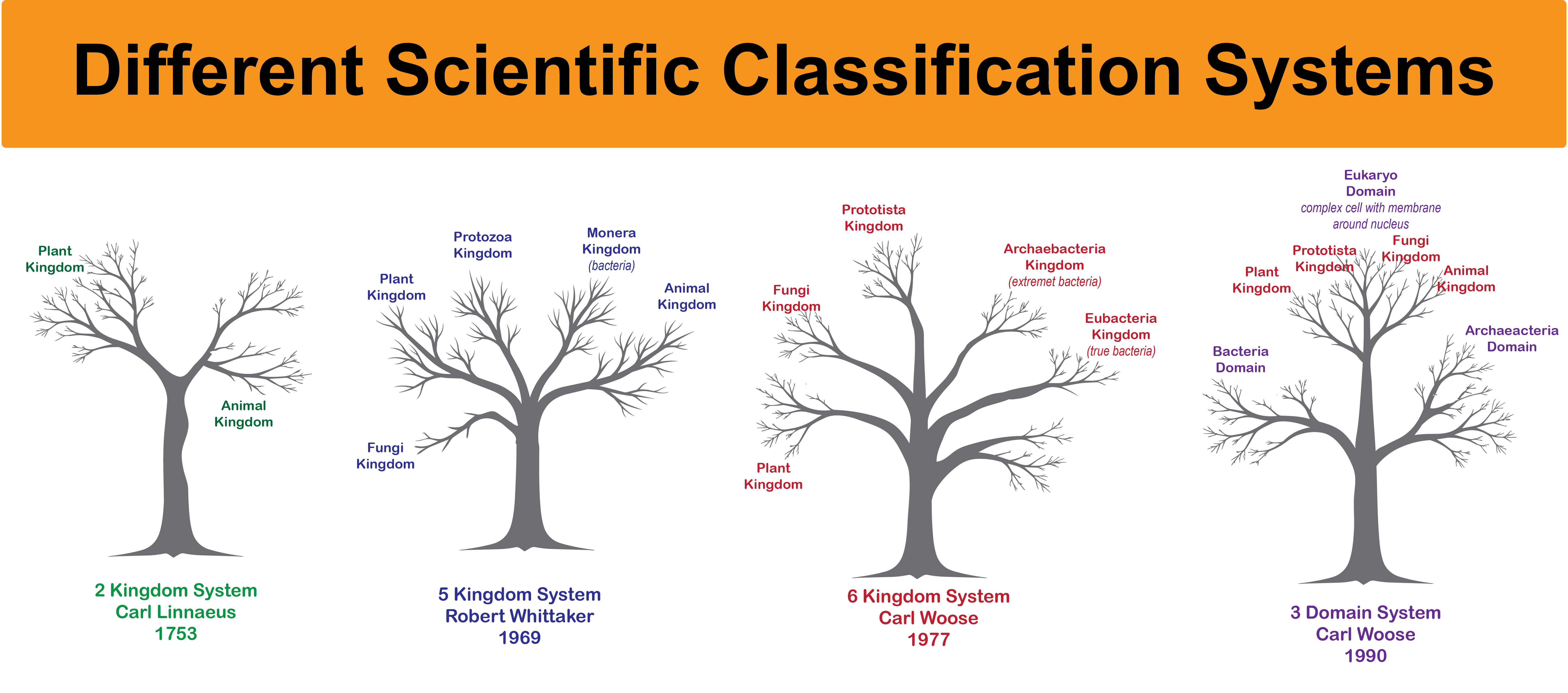
Details more visible below.
As scientific knowledge expanded, so did the scientific classification systems that listed the known organisms.
Here is a breakdown to explain the differences that occurred over time.
Carl Linnaeus and Scientific Classification
1753 - Two Kingdoms
Our taxonomy system dates to the work of the Swedish physician and scientist, Carl Linnaeus (1707-1778). He spent decades cataloging plants and animals. His first work, Systema Natura (1735), was only twelve pages but laid the foundation of his later work.His 1753 Species Plantarum was two-volumes. In the decades between those two works, Linnaeus had produced other publications with the goal of adding all known living-organisms to his taxonomy.
Original Taxonomy
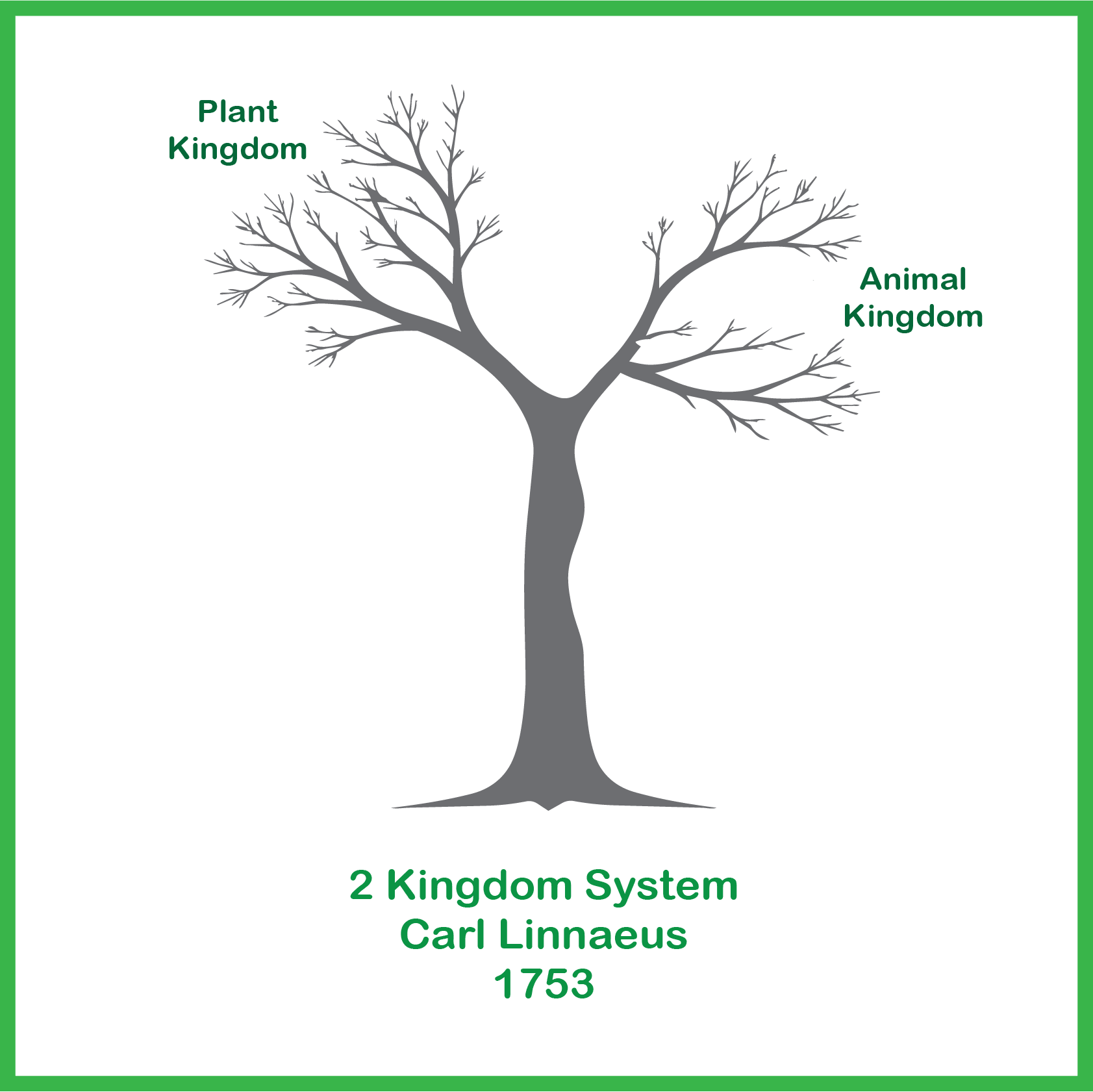
This was simple and non-controversial. Plants or animal.
Who could argue?
And, as all biology students can tell you, every organism was further cataloged into these taxonomy groups:
- Kingdom
- Phylum
- Class
- Order
- Family
- Genus
- Species
Microscopes and Taxonomy
It is true that the microscope was invented prior to Linnaeus birth. The term "microscope" was first introduced in 1625, though previously hand-held lens that we might call a magnifying class were developed earlier.As Galileo was looking up with the telescope, others were peering downward through the microscope.
Eventually, humanity beheld tiny, one-celled organisms under the microscope that Linnaeus had not listed. These were considered either very tiny plants or very tiny animals.
Protozoa and Taxonomy
Linnaeus taxonomy continued to expand as explorers and scientists found new species. Only a generation after Linnaeus, in 1818, protozoa were included as an animal phylum.Protozoa, like all animals, could move. But future scientisits would discover that the protozoan's digestion of nutrients was more like a plant.
The debate was on: plant or animal - just how should a protozoan be classified?
4 Kingdoms
1866: Ernest Haeckel
In 1866 Ernest Haeckel published a proposal in General Morphology of Organisms that protozoa and monera (bacteria) should be classified as distinct kingdoms. Not only had the non-majestic, single-celled creatures graduated to their own kingdom, but they were divided by the presence of a nucleus and other organelles. Haeckel's kingdoms were:- Plant
- Animal
- Protozoa (single cell, with nucleus)
- Monera ie bacteria (single cell, no nucleus)
5 Kingdoms
1969 - Robert Whittaker
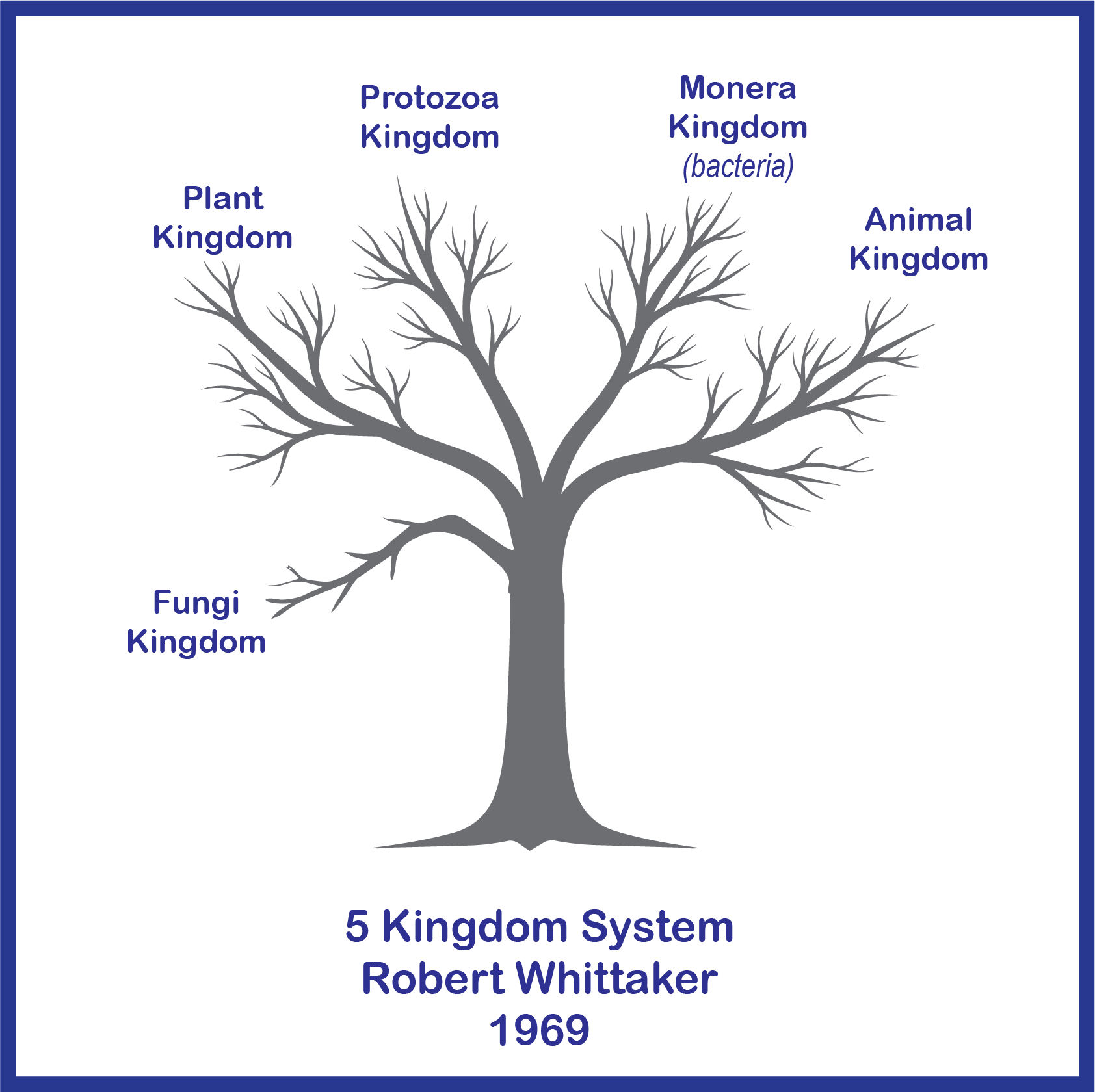
Not only had single-celled organisms been granted the right to their own kingdoms, but fungus was added as another kingdom. These unique organisms could be single-celled or multi-cellular and had diverse methods of reproduction.
The kingdoms five accepted kingdoms were:
- Plant
- Animal
- Protozoa (single cell, with nucleus)
- Monera ie bacteria (single cell, no nucleus)
- Fungus (single or multi-cellular, cell wall, diverse reproduction)
6 Kingdoms
1977 - Carl Woose
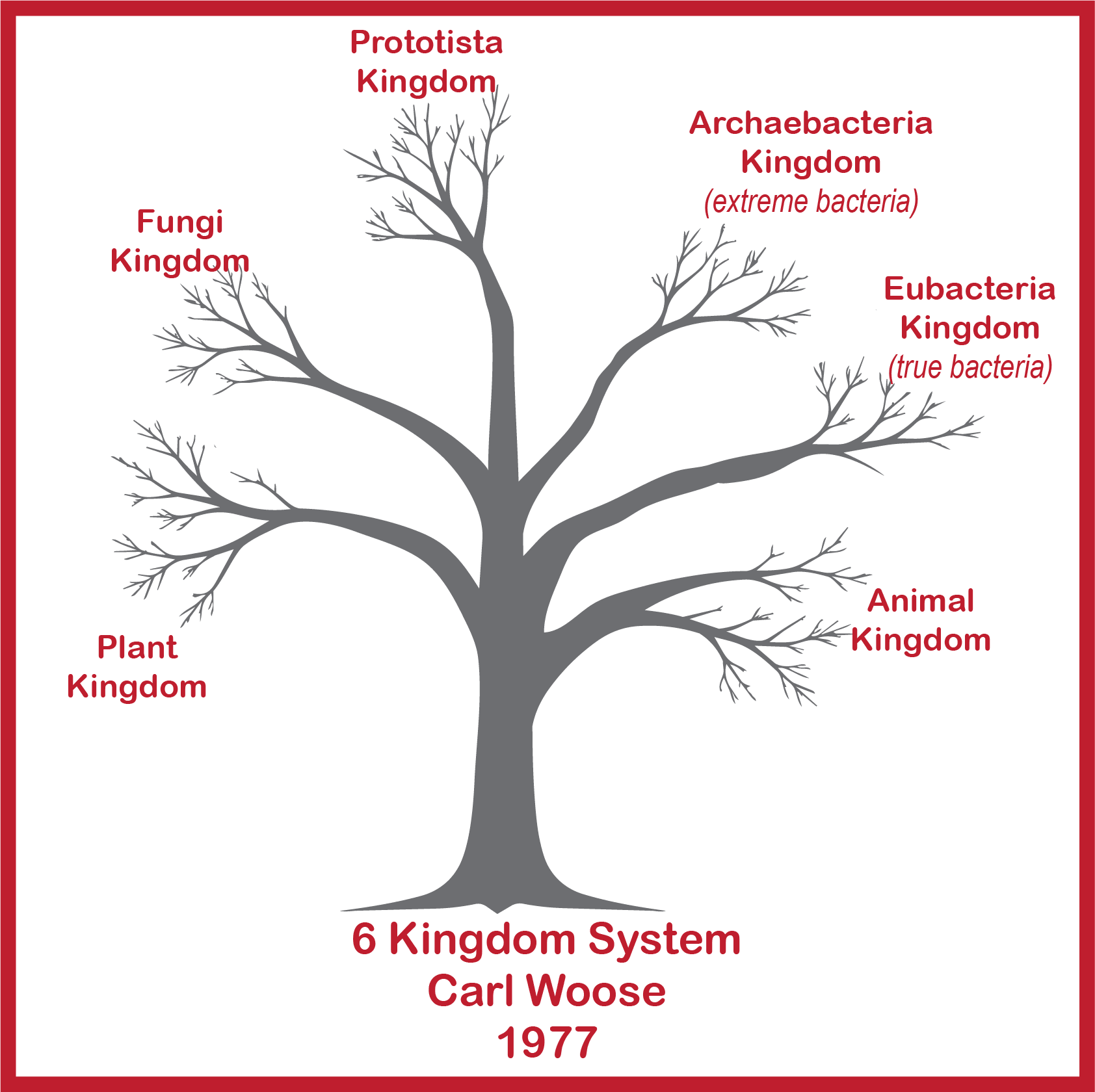
- Plant (multi-cellular eukaryo = complex cell with nucleus)
- Animal (multi-cellular eukaryo = complex cell with nucleus)
- Protozoa (single cell eukaryo)
- Fungus (single or multi-cellular, eukaryo cell wall, diverse reproduction)
- Eubacteria (single celled, pro-karyo=simple cell with no nucleus, a polysaccharide double membrane around entire cell)
- Archaebacteria (single celled, pro-karyo=simple cell with no nucleus, a polysaccharide membrane around entire cell)
Pace, Sapp, Goldenfeld. Phylogeny and beyond: Scientific, historical, and conceptual significance of the first tree of life Proc Natl Acad Sci U S A. 2012 Jan 20;109(4):1011–1018. doi: 10.1073/pnas.1109716109. PMCID: PMC3268332 PMID: 22308526)
Wow, this is starting to get a little complicated. Gone are the days when a student could confidently place any species into one of the two kingdoms (plant or animal.) Now one has to wrack their brain around cellular organelles and what chemicals constitute their membranes.
But, at least we have this whole taxonomy thing nailed. Right?
Wrong.
3 Domains: The Modern System
1990 - Carl Woose
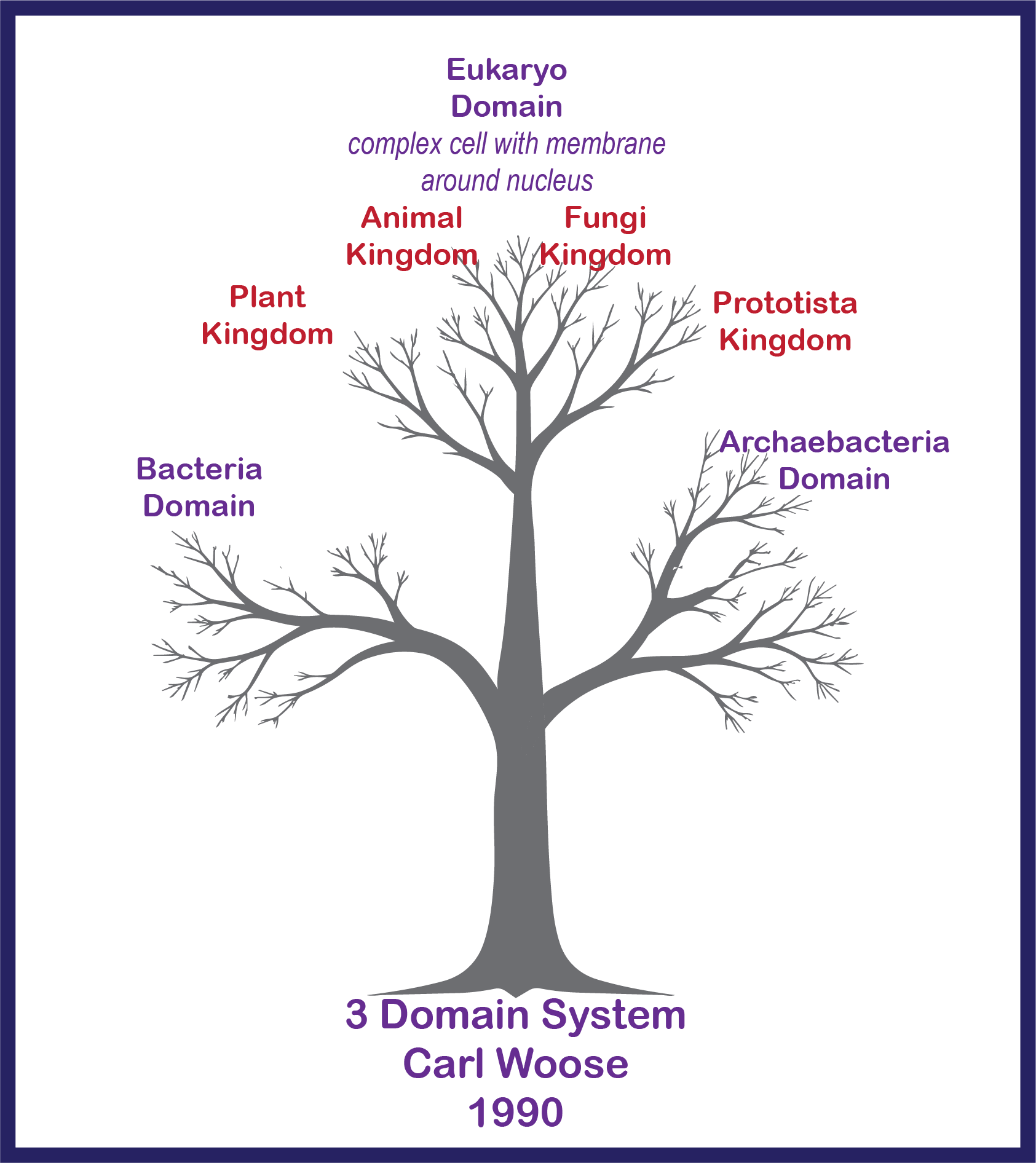
The level of "kingdom" lost it's place as king of the taxonomy mountain. "Domain" is now top dog. Here are the three largest taxonomy groups:
- Eukaryo - complex cell with a membranes around the nucleus; single or multi-cellular
- Eubacteria (or simply bacteria) - simple cell without organelles, double-layer membrane around entire cell made of polysaccharides (protein + sugar), single celled
- Archaeabacteria - simple cell, single-layer membranes around cell without polysaccharides, single cell, many living in extreme climates
Hey, What Happened to Plants and Animals?
Plants and animals maintained their status as separate kingdoms. But now all those kingdoms were under the "Eukaryo" domain.Domain: Eukaryo
- Animal
- Plant
- Fungi
- Protozoa
The astute reader will note the similarity between this and the 5 Kingdom Scientific System. We just keep shuffling those bacteria around, trying to find where they best fit into the taxonomy.
Meanwhile, it became harder to explain taxonomy to the average third grader.
Controversy and Diversity in the Classification Schemes

Change #1 - Domain Added
Changes to the Scientific Classification System
The most obvious change is the addition of "Domain" at the top of the taxonomy hierachy.For students who had easily cited, "Dear King Philip Cried, "Oh For Goodness Sake," a new neumonic was developed:
Dear
King
Philip
Cried
Oh
For
Goodness
Sake
Change #2 - Supergroups
Changes to the Scientific Classification System
As biologists have investigated the DNA of living creatures, the scientific classification schema has evolved into a far more complex system than the 8 taxonomy levels. Super-groups and sub-groups have joined nomenclature.What Is A Supergroup?
A supergroup is a set of organisms within a group that have share a common ancestor that other organisms in that group do not share. If that's confusing, let's give a simple example before moving on. Let's say we had a domain in a store called "merchandise for sale" and within that domain there was a kingdom "furniture." Within that kingdom, we had the following phylum:- Tables
- Dining Room Chairs
- Desks
- Sofas
- Office Chairs
- Recliners
- Cabinets
- Domain: Merchandise
- Kingdom: Furniture
- Phylum: Dining Room Chairs
- Domain: Merchandisev
- Kingdom: Furniture
- Super Phylum: Furniture to sit on
- Phylum: Dining Room Chairs
Plants and Super-group Archaeplastica
- Domain: Eukaryo
- Super Kingdom: Archaeplastica
- Kingdom: Plants
- Kingdom: Algae
Now let's check out the animal category.
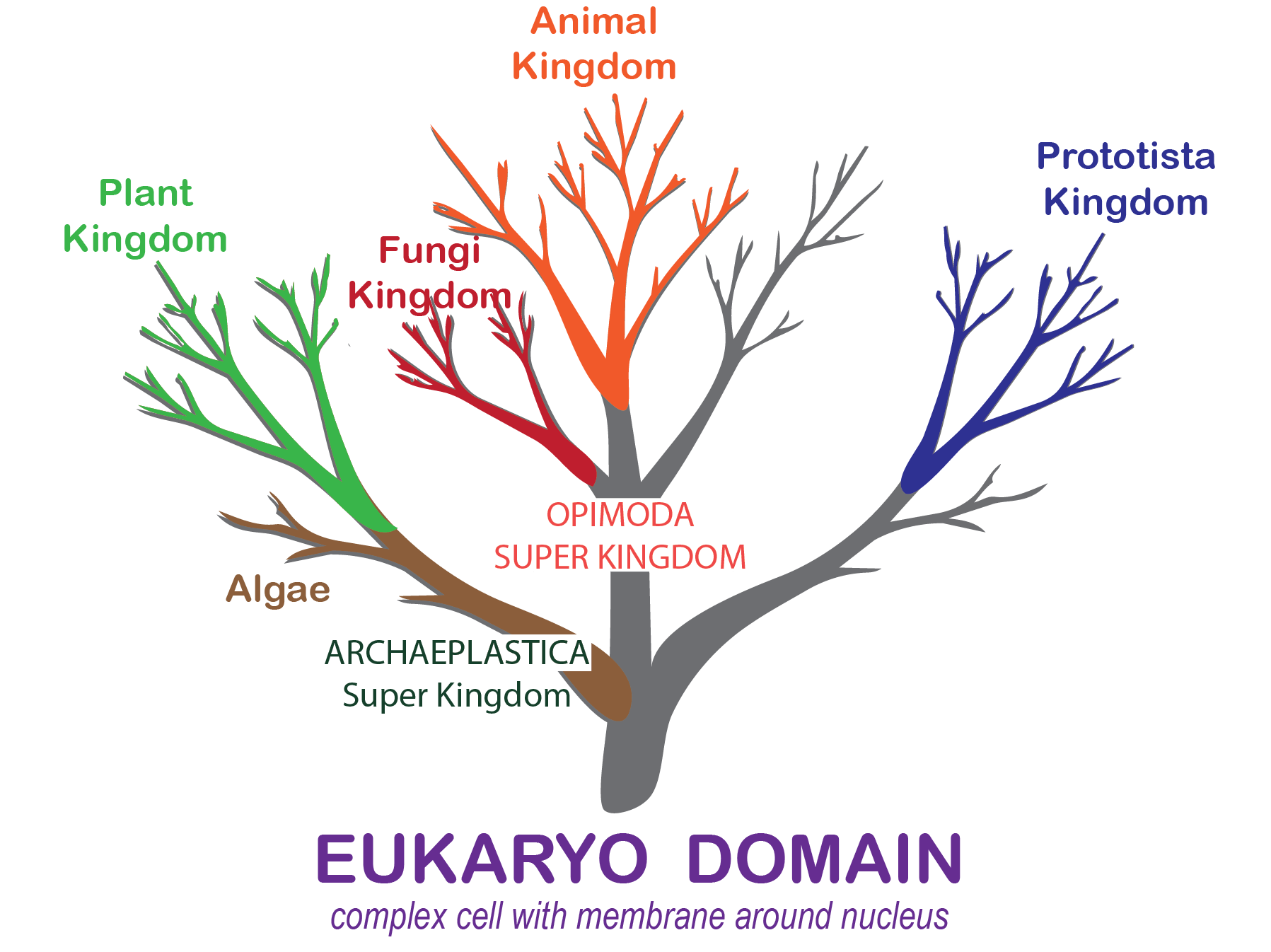
Animals and Super-group Opimoda
- Domain: Eukaryo
- Super Kingdom: Opimoda
- Kingdom: Animal
- Kingdom: Fungi
Change #3 - Sub-Groups
Changes to the Scientific Classification System
You will be happy to know that sub-groups are easier to understand than super-groups. But they follow the same principle. Here's a famous example from our scientific classification of dogs MatchCard.- Domain: Eukaryo
- Kingdom: Animal
- Phylum: Chordota (has spinal cord)
- Class: Mammalia (live young)
- Order: Carnivora (teeth of meat-eaters, includes dog and cat like creatures)
- Family: Canidae (dog like: wolves, foxes, coyotes, jackals)
- Genus: Canis (78 chromosomes - includes wolves and coyotes)
- Species: Lupis (wolves and dogs)
Now if you have seen any chihuahuas lately, you might observe that there is a slightly noticable difference between a wolf and a chiuaua.
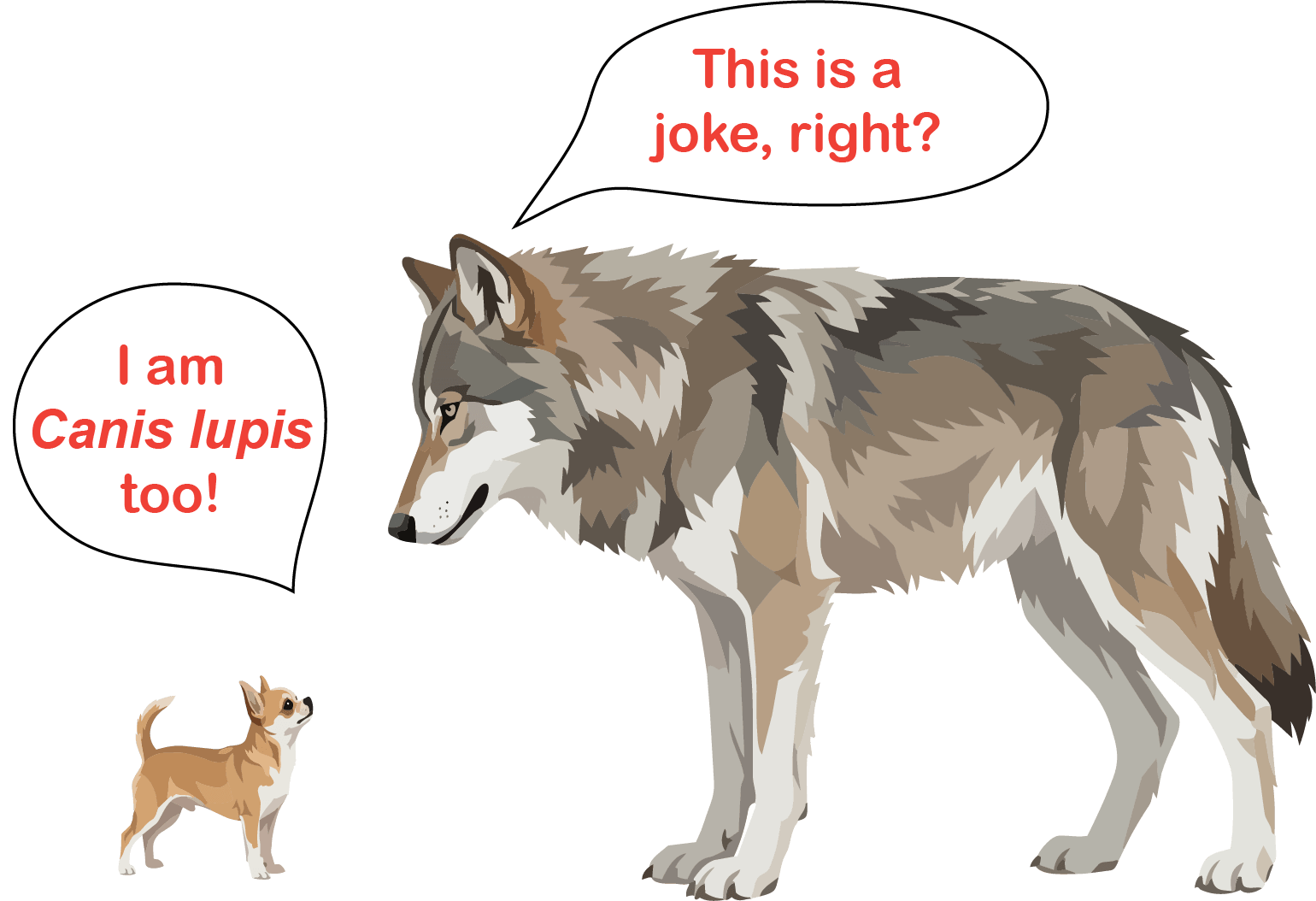
- Domain: Eukaryo
- Kingdom: Animal
- Phylum: Chordota (has spinal cord)
- Class: Mammalia (live young)
- Order: Carnivora (teeth of meat-eaters, includes dog and cat like creatures)
- Family: Canidae (dog like: wolves, foxes, coyotes, jackals)
- Genus: Canis (78 chromosomes - includes wolves and coyotes)
- Species: Lupis (wolves and dogs)
- Sub-species: Canis Lupis Familiaris (Domesticated Dog)
- Sometimes simply called Canis Familiaris - they are the same thing!
- Sub-sub-species: Chihuahua
- Sub-sub-sub-species: Hairless Chihuahua
Today, you will find most animals and plants will be categorized within super-groups and sub-groups of the original taxonomy.
Change #4 - Regrouping Due to DNA Analysis
Changes to the Scientific Classification System
We have seen that scientists have added a new layer (domain) and added super-groups and sub-groups to accurately categorize living things - particularly those more recently discovered.Sometimes, they have to do something else - reassign a long-known species.
Here's a common example: Hawks and Eagles
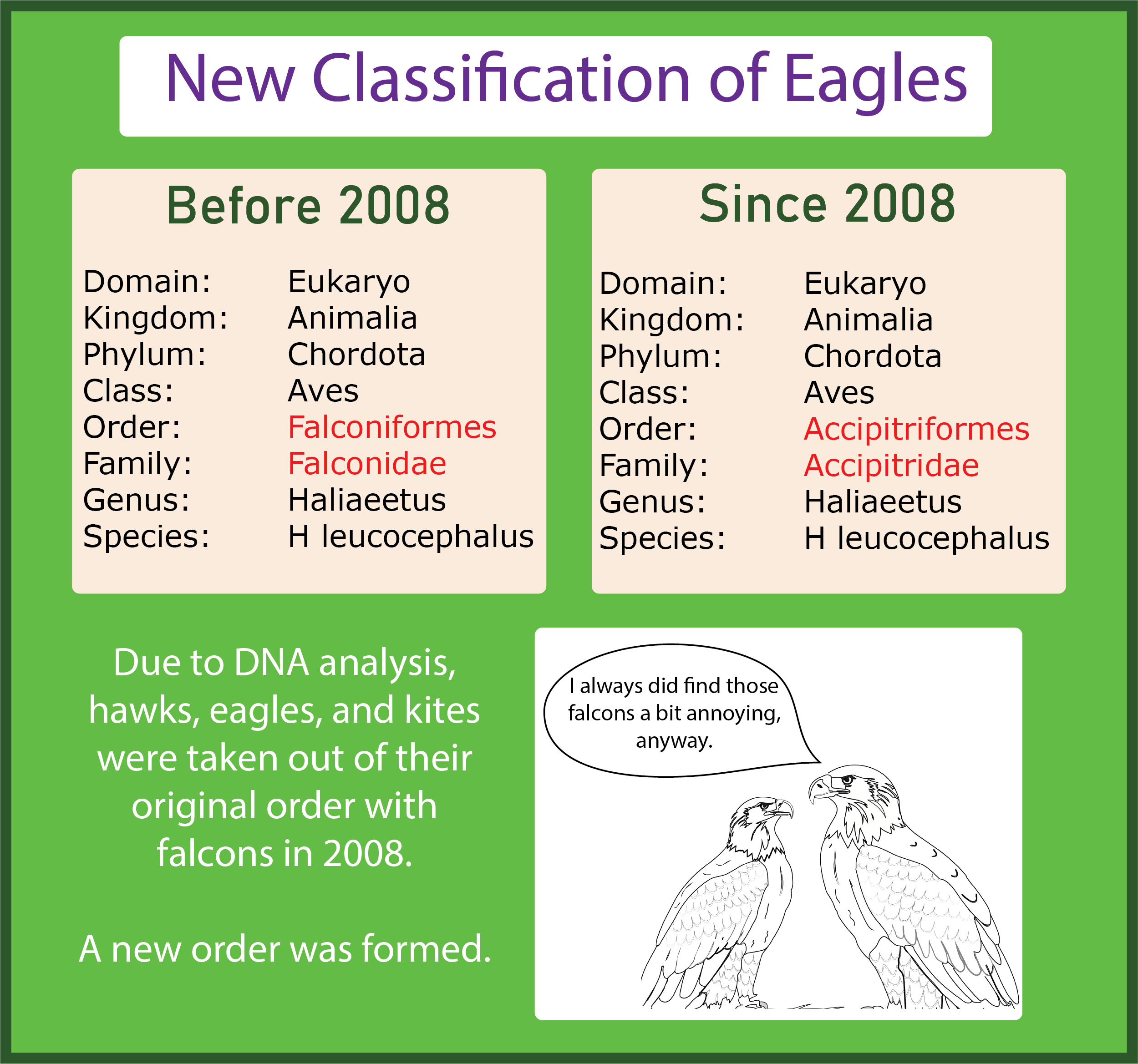
DNA analysis has shown that the falcons have a distinctly different genetic heritage and a new order - accipitriformes - was developed.
Learn more about bald eagle taxonomy and unit study.
Kids Taxonomy Worksheet
MatchCard Science
How To Use MatchCards
Download the FREE MatchCard Science Instructor's Guide and see how MatchCards can make building their science knowledge base fun.
Zoology Unit Study

There are a total of thirteen zoology objectives and MatchCards for this unit which will take 6 to 8 weeks to complete.
12 Science Unit Studies
Chemistry is only one of twelve complete unit studies for kids in 3rd to 8th grade.
Comprehensive objectives, hands-on projects, suggested science fair experiments, and the fun game-like MatchCards keep them interested in learning science. See all twelve MatchCard Science Unit Studies.
Ready To Use Resources








About Our Site
Hands-On Learning