
Captain Kidd Mapps
Follow on the trail of Captain Kidd with maps of his 1696-1699 journey that made him famous.
But look out. You might not find what you were expecting.
Journey of the Adventure Galley
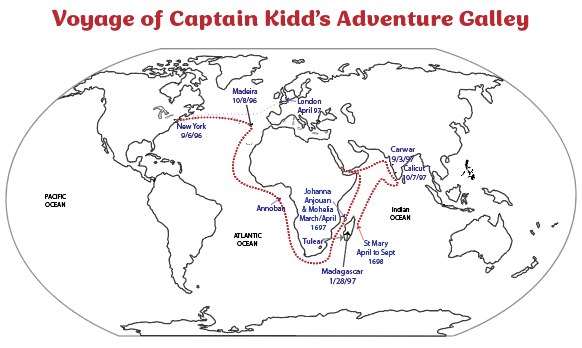
In September of 1696, the truly adventurous adventure began. The Galley crossed the Atlantic, sailed down the western coast of Africa and round the Cape of Good Hope - but not without drama that would cause Kidd the loss of his reputation and life.
They stopped off the western coast of Madagascar, sailed north towards the Red Sea, where they had their first encounter with a convoy of ships. From there they sailed east towards India, but were not able to land and restock due to accusations of piracy by Commodore Warren. On the western coast of India they took two prizes (the privateers' word for a captured ship.) In spite of historians' repeated claims, the two ships he seized both had French passes and were within his orders to obtain.
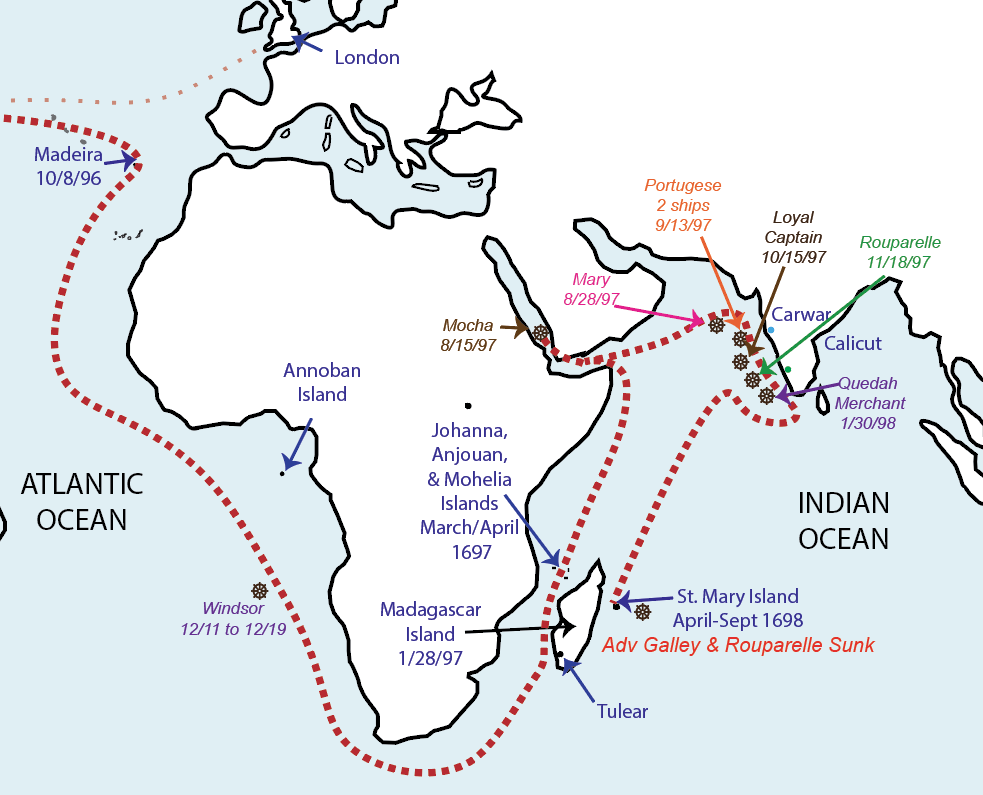
There on a pirate island reminiscent of Treasure Island (and no less dramatic - even though truly historical) most of his crew abandoned him to join a real pirate.
Meanwhile, with his handful of faithful men, he waited for the winter trade winds to change for his return voyage back across the Atlantic.
Westward Return to North America
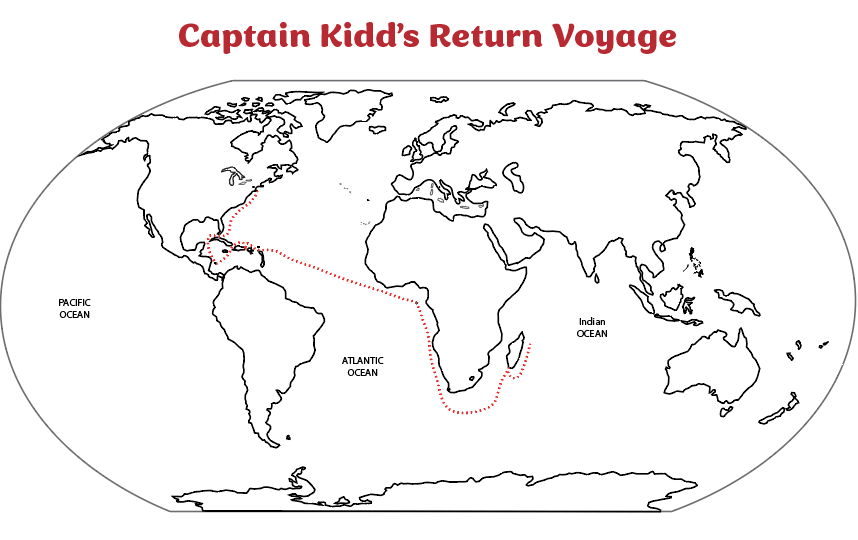
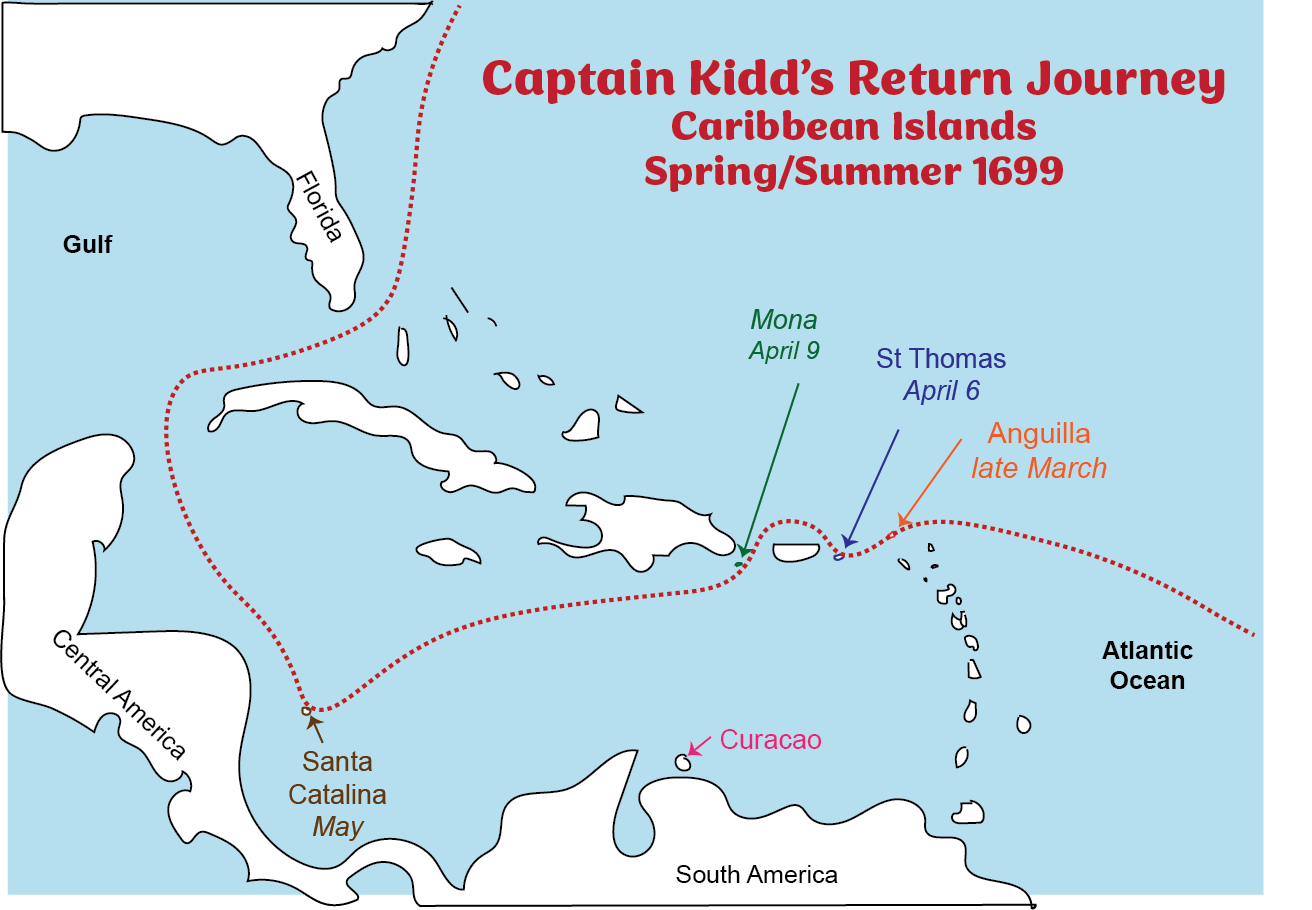
Rumors continue to circulate to this day that he buried vast treasure somewhere in the West Indies. (Personal hint: the prizes he took had spices, exquisite linens, and livestock. If he did bury it, just what do you think you would find now? But - feel free to look.)
Northward to New England
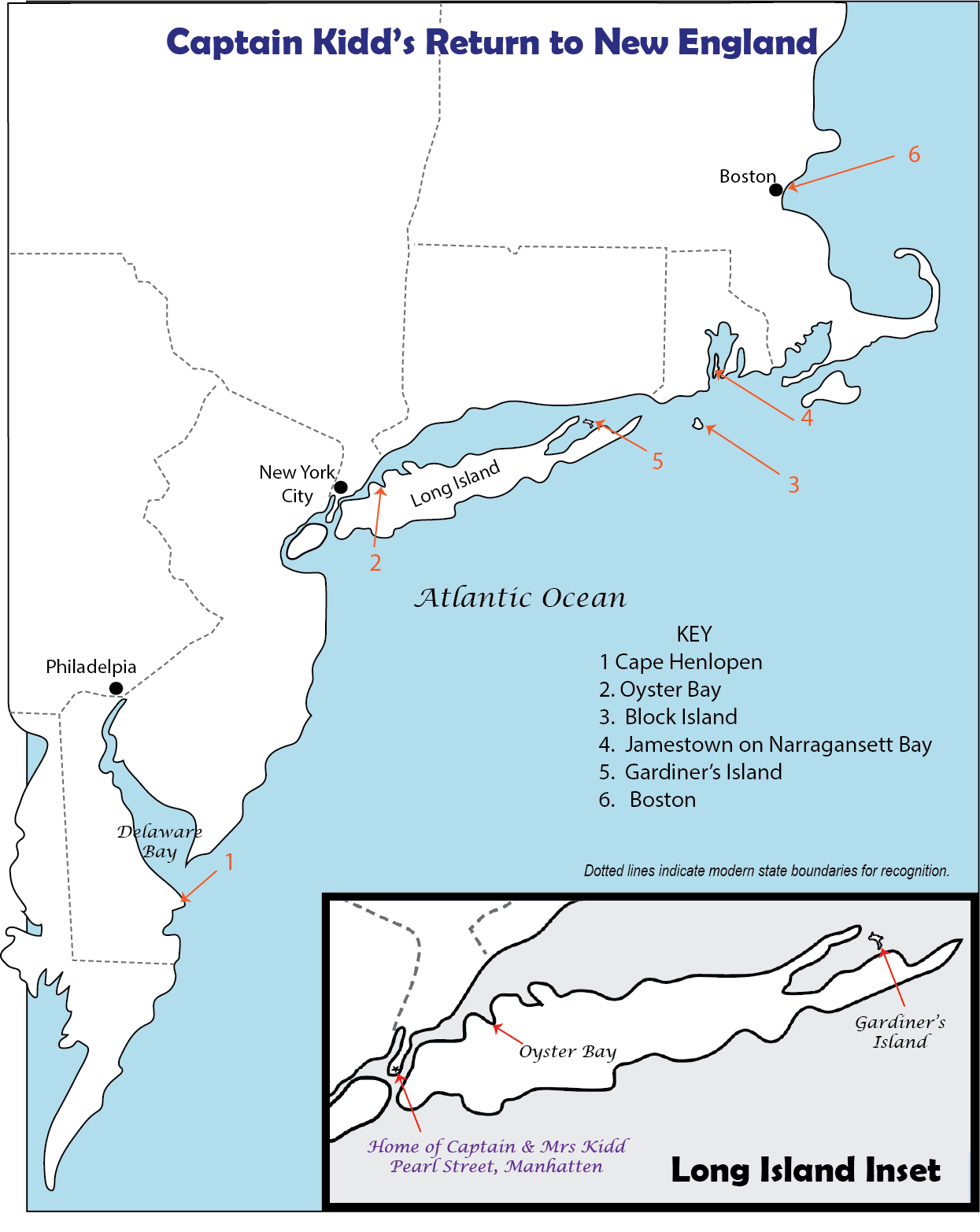
His final journey was in shackles back across the Atlantic to England, where he was held in solitary confinement without charges for almost two years, before being tried in a highly-questionable trial.

Ready To Use Resources